


I'm Chad Heisman, founder of Precision Paintworks. After serving in the military, I built this company in 2021 on a pretty simple idea: your home deserves the same care I'd give my own.
I run a veteran and family-owned painting crew right here in Maryland that has successfully completed over 500 painting projects so far. Got a question about your place? Ask me. I'd rather help you get it right the first time than sell you anything.
The difference between residential and commercial painting services in Maryland starts with the rules. Painting a home is home improvement, so the contractor needs a Maryland Home Improvement Commission (MHIC) license, a written contract and a deposit of no more than a third of the price. Commercial painting covers offices, stores, restaurants and apartment common areas; it has no statewide license and runs on insurance certificates, building rules and after-hours schedules, often with lifts and OSHA-trained crews.
Many DMV painters, including ours, do both.
What Is Commercial Painting?
Commercial painting is painting done for a business or property owner on a space that isn’t someone’s private home. For our crews, that means offices, retail storefronts, hospitality spaces, the common areas of multifamily buildings, and shop and warehouse floors that need a coating rather than paint.
The client is usually a business owner, a facility manager or a property manager, and the job runs to their schedule and their building’s rules.
We handle commercial painting in Maryland alongside homes, and the differences below come from both sides of our calendar.
In Maryland, the Paperwork Is Different
In Maryland, painting someone’s home counts as home improvement, and that’s regulated by the Maryland Home Improvement Commission. The contractor has to hold an MHIC license, the job needs a written contract, and the deposit can’t be more than a third of the price.
If a licensed contractor doesn’t finish the work or does it badly, the homeowner can file a complaint with the Commission and may be able to claim from its Guaranty Fund. Our license is MHIC #156360, and a homeowner can look it up before we ever set foot inside.
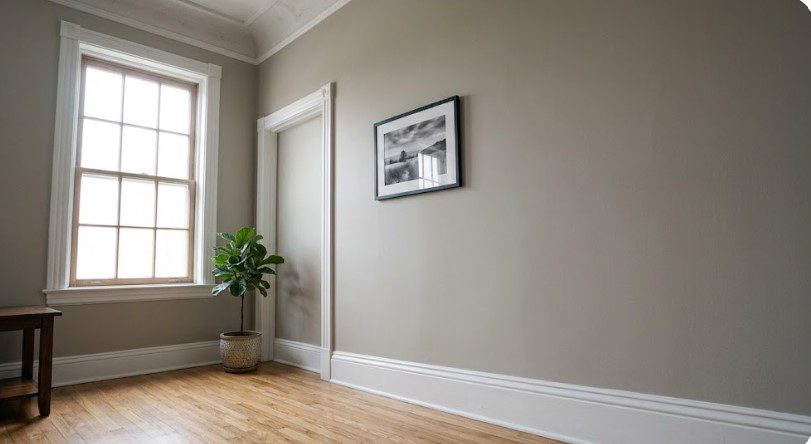
The living room below is a typical home job. The owners picked the soft blue for the walls, and the contract laid out the scope, the price and a deposit within the one-third limit before we started.
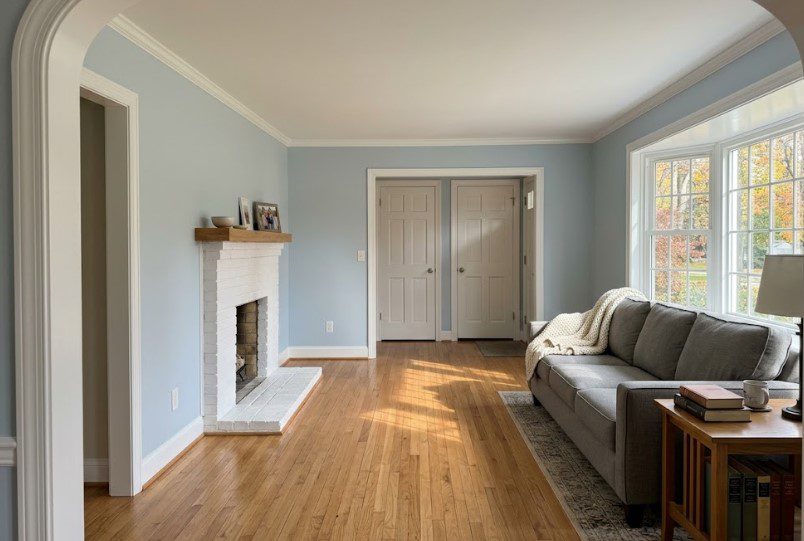
Commercial work has no statewide license. Instead, a property manager typically asks for a certificate of insurance naming the property, any county license that applies, and the building’s access rules before signing, and the terms are set in the contract rather than by state rules.
One in-between case: an individual condo unit counts as home improvement under MHIC, so painting it follows the home rules. The common areas of a condo building, and larger apartment buildings, don’t.
Lifts, OSHA and After-Hours Crews
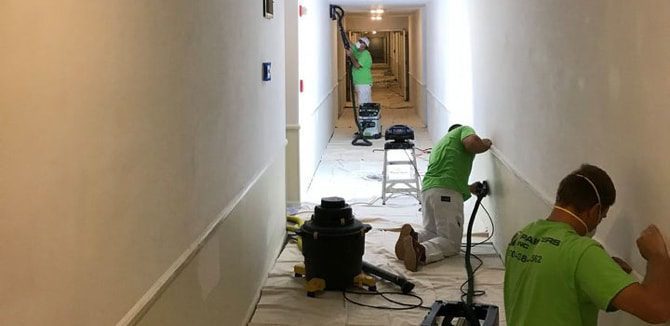
On a commercial site, the work has to fit around a business that’s still running. That usually means painting at night or on weekends, keeping entrances open, and reaching heights a ladder can’t handle safely. Our commercial teams are lift-certified, and every site has an OSHA-trained lead who sets the safety plan before anyone goes up.
The storefront below was painted after dark, once the shops had closed. The crew worked from a boom lift under portable floodlights.
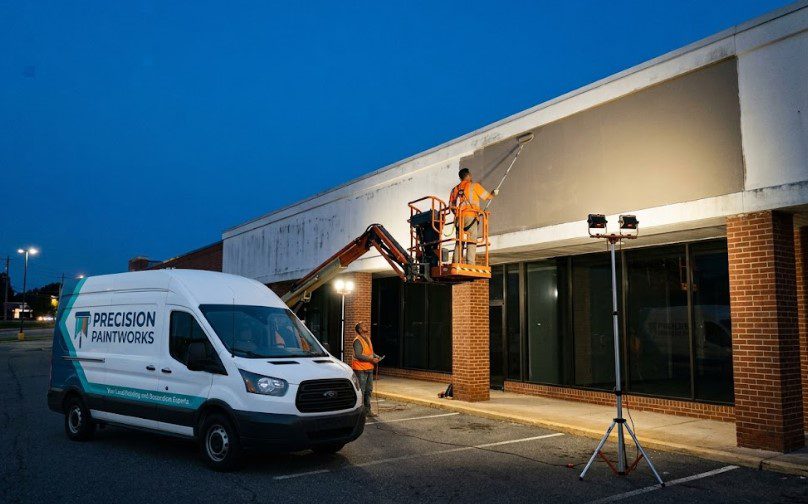
At home, we’re there when the family is. At a business, we’re there when the customers aren’t.
Different Spaces, Different Coatings
In a living room like the one above, we usually reach for Sherwin-Williams Emerald or Benjamin Moore Aura: rich color, low odor and a finish that wipes clean. The homeowner picks the look, and the product serves it. At a business, the questions change to how much traffic a surface takes, how often it gets cleaned, and whether a floor has to stand up to carts, jacks or spills.
The shop floor below is a good example. A service bay sees rolling tool chests, dropped parts and oil every day, so it got a gray epoxy coating with a yellow safety line instead of paint.
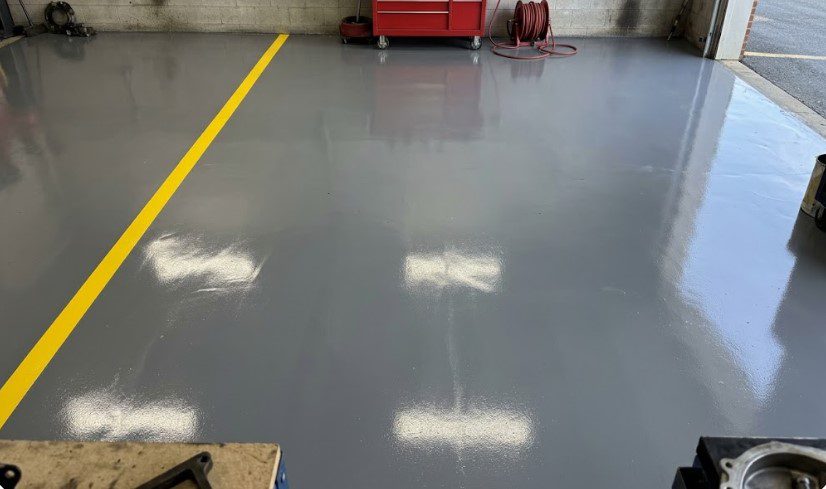
A warehouse or shop floor needs industrial epoxy floors rather than paint, because nothing else stands up to that kind of wear.
Hiring Commercial and Residential Painters in the DMV
Whether you’re hiring for a house or a business, three checks cover most of the risk:
- For home work, look up the MHIC number. The Maryland Department of Labor’s license search shows whether it’s active.
- For business work, ask for a certificate of insurance and any county license. Have the certificate name your company or property.
- Ask who your one point of contact is. On a home job or a commercial one, you should know who to call.
Commercial and residential painters who do both should be able to show you both sets of paperwork. If you’re weighing whether to tackle part of a home project yourself, hiring an exterior painter in Maryland comes down to the same licensing and contract protections.
FAQ
Does a painter need an MHIC license to paint my office?
No. MHIC licenses home improvement work, so an office or store doesn’t fall under it, though county licensing and the insurance your landlord requires still apply.
Is painting one condo unit residential or commercial work in Maryland?
Under MHIC, an individual condo unit counts as home improvement, so the license, written contract and deposit rules apply. The building’s common areas fall outside it.
Do commercial painting contracts have the same deposit limit as home jobs?
No, the one-third cap is a home improvement rule, so commercial deposits are set in the contract. Experienced commercial and residential painters spell out payment terms in writing either way, and knowing what house painting costs in 2026 helps you judge a home quote.
Home or Business, One Team
We’ll handle the paperwork that fits the job, the MHIC contract for your home or the insurance certificate for your building, and schedule the crew around your day. Our crews take on residential painting and commercial painting across Maryland, DC and Northern Virginia, so get a free quote for either.