


I'm Chad Heisman, founder of Precision Paintworks. After serving in the military, I built this company in 2021 on a pretty simple idea: your home deserves the same care I'd give my own.
I run a veteran and family-owned painting crew right here in Maryland that has successfully completed over 500 painting projects so far. Got a question about your place? Ask me. I'd rather help you get it right the first time than sell you anything.
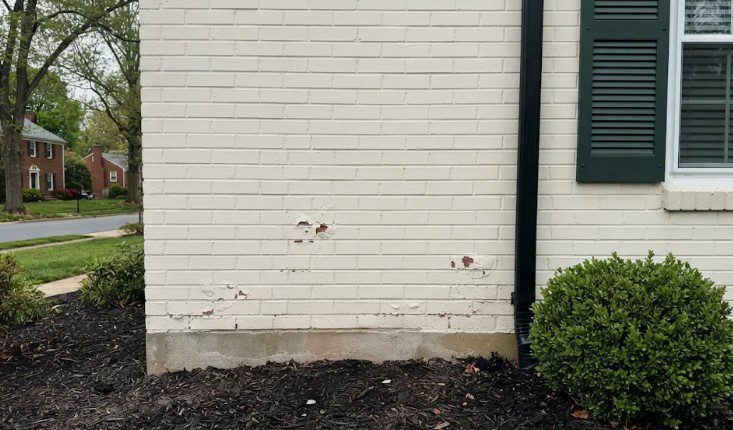
Your house needs repainting when the paint is peeling, bubbling, cracking or rubbing off as white powder, or when bare wood is showing anywhere. Fading alone and dirt on the siding usually don’t mean new paint yet. You can sort out which group your house falls into with your eyes and one hand.
Start With a Slow Walk Around the House
Pick a dry day and walk the whole house once. Look closely at the sunny side, the window sills, the bottom boards near the ground, and anywhere a gutter or downspout drops water. Most signs your house needs repainting show up in those spots first.
As you go, sort what you find into three piles. Heavy chalking, cracking or paint worn through to bare wood means a repaint is coming soon. Bubbles, peeling, gaps in the caulk or soft wood mean something has to be fixed before any paint goes on. A dull, dirty or slightly faded surface where the paint is still firm usually just needs a good wash.
How to Tell if Exterior Paint Is Chalking
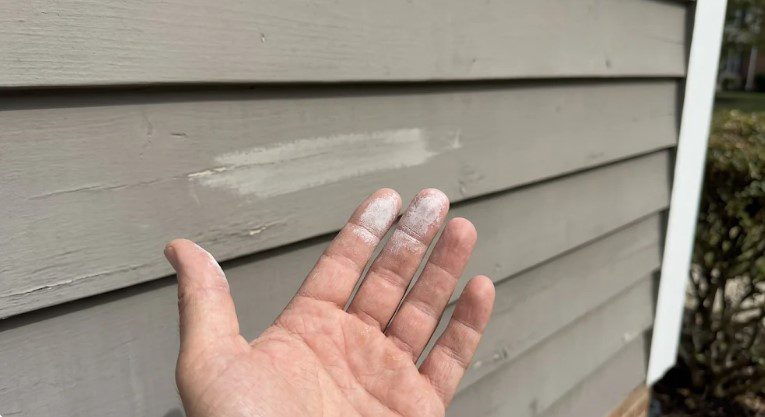
Rub your palm across the siding in a sunny spot. If your hand comes away white or tinted with the house color, the paint is chalking. Sun has broken down the binder, so the color sits on the surface like dust.
That’s what I saw on a taupe house in Silver Spring. The owners figured the siding just looked tired, but one swipe left my fingers coated and a clean streak across the board. A little chalk is normal on older paint. This much meant the coating was near the end of its life. We washed off the powder, let the siding dry, primed the worn boards and finished with two coats.
Does Cracked Caulk Mean You Need to Repaint
Not by itself. Caulk dries out and shrinks long before paint does, so a crack beside a window is often just a recaulk and a touch-up. It turns into a repaint question when the paint around that crack starts lifting.
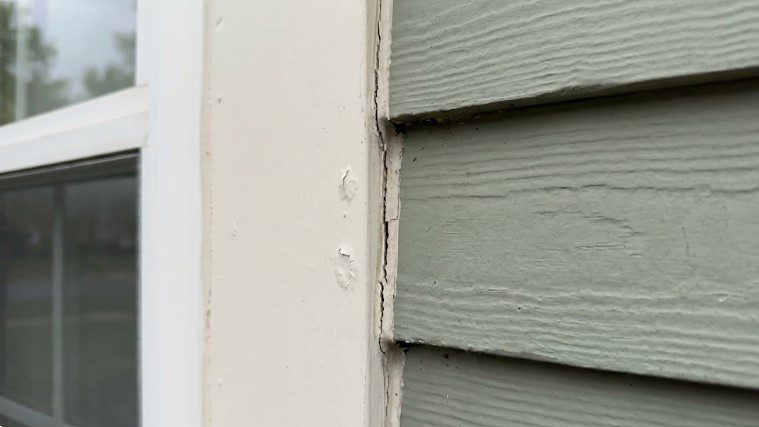
A Gaithersburg home had a clear look at the difference. Where the white window trim met the green siding, the caulk had split open from top to bottom, and the paint on the trim beside it was flaking in small spots. Water had been slipping behind that joint for a while. We cut out the old caulk, checked the wood underneath, scraped the loose paint, recaulked and repainted the trim on that side.
Bubbles and Peeling Mean Fix First, Then Paint
Bubbles are almost always water or heat pushing paint away from the wood. Painting over them only buries the problem for a season.
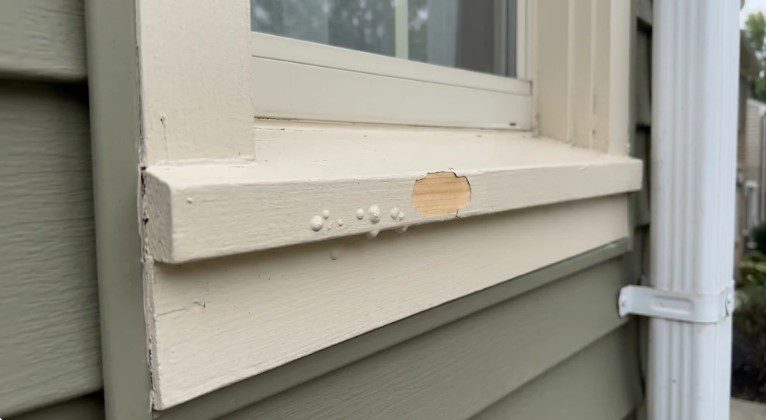
I got a call from a homeowner in Germantown who’d noticed small blisters along a window sill and one spot where paint had popped off to bare wood. The sill sat right next to a downspout, so it stayed wet after every storm. It’s the same pattern behind most peeling paint: water behind the film or a bond that has given up. Once the water issue was sorted, we scraped back to a firm edge, primed the bare wood and put on two coats.
Do You Need to Repaint or Just Pressure Wash Your House?
If the paint passes the rub test, holds tight and only looks dull or green in spots, washing is often enough. Mildew and road dust can make sound paint look years older than it is. I use a low-pressure wash instead of a hard blast, because high pressure can drive water into seams and strip paint that was still fine. If the siding still looks worn once it’s clean and dry, that’s when a repaint goes on the list.
Can You Repaint Just One Side of a House
Yes, when the other sides are still in good shape. In Maryland, south and west walls take the most sun, so they often wear out years ahead of the rest.
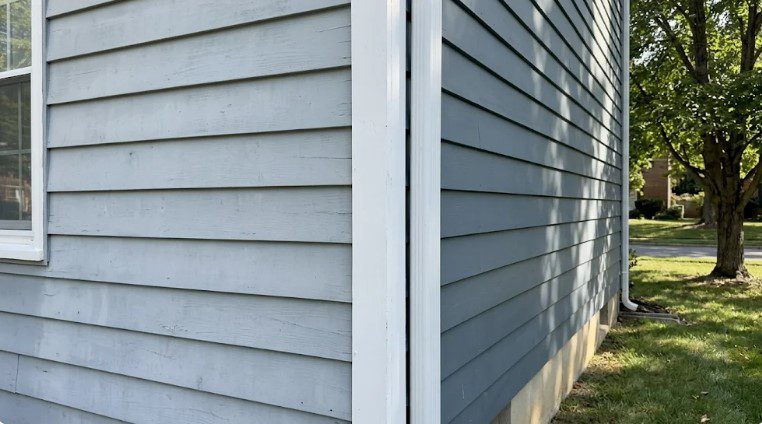
You can see that split clearly on a blue house we painted in Olney. At the corner, the sun-facing wall had gone pale and chalky while the shaded wall beside it still held its color. The other sides were sound, so we repainted only that wall, corner to corner, in May 2026. Even a matched color can look a little different next to older paint, which is why I always stop at a corner and never halfway across a wall.
How Often to Repaint a House in Maryland
Our winters freeze and thaw over and over, and our summers stay humid, so paint here works hard. On wood siding with good prep, I usually see about 6 to 8 years between full repaints, with sunny walls sometimes needing attention sooner and caulk often needing a refresh in between. Rather than going by the calendar, do the walk-around every spring. Our exterior painting service starts with that same check.
FAQ
Can I paint over chalky siding without washing it first?
No. New paint applied over that powder grips the powder, not the siding, and it can let go early. The surface needs a thorough wash and time to dry, and badly worn boards may need primer first.
Is fading a reason to worry?
Usually not on its own. Fading is mostly cosmetic as long as the paint stays firm and smooth. It becomes a concern when the faded area also leaves powder on your hand or starts to crack.
What time of year is best for exterior painting in Maryland?
Late spring through early fall usually works best, when days stay mild and nights don’t drop too low. I avoid rainy stretches and very hot afternoons, since both make it harder for paint to go on well.
Do I need to test for lead before any paint work?
If your home was built before 1978, yes. Older layers may contain lead, so I test before any scraping or sanding. Testing first protects your family, your yard and anyone working on the house.
Can I handle small touch-ups myself?
Small spots, yes, if the paint around them is sound. Clean the area, scrape anything loose, prime bare wood and use the same color. Bigger areas often look patchy, so whole walls usually turn out better.
What to Do After Your Walk-Around
If all you found was dirt, wash it. If you found a split joint or a few blisters, fix those spots before another winter gets into them. If chalk, cracking or bare wood show up on more than one wall, it’s time to plan a repaint. When you’d like a second set of eyes, book a visit and I’ll walk the house with you.