


I'm Chad Heisman, founder of Precision Paintworks. After serving in the military, I built this company in 2021 on a pretty simple idea: your home deserves the same care I'd give my own.
I run a veteran and family-owned painting crew right here in Maryland that has successfully completed over 500 painting projects so far. Got a question about your place? Ask me. I'd rather help you get it right the first time than sell you anything.
On a deck, stain almost always beats paint. Stain soaks into the wood and lets it breathe. Paint just sits on top as a film.
Every so often a homeowner asks me to paint their tired old deck. Usually it’s because a painted deck looks crisp and uniform in a photo. And every time, I slow them down for the same conversation. So should you stain or paint a deck? On a deck, painting is one of those choices that looks great for a season and then causes headaches for years.
Let me show you two decks we brought back. Then I’ll tell you why we reached for stain both times.
A Weathered Stair-and-Landing Deck, Brought Back
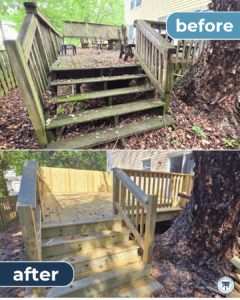
The “before” is a deck that had given up. Gray, dried-out boards. A set of stairs that looked more like driftwood than a finished surface. That splintery, tired look wood gets after years of Maryland weather with nothing protecting it.
Here’s how we handled it:
- Cleaned and prepped the wood first. You cannot refinish over dirt, mildew, and a failing gray surface. It has to come back to clean, sound wood before anything else happens.
- Let it dry. People skip this one constantly. Wood has to be dry before it takes a finish, or you’re just sealing moisture inside.
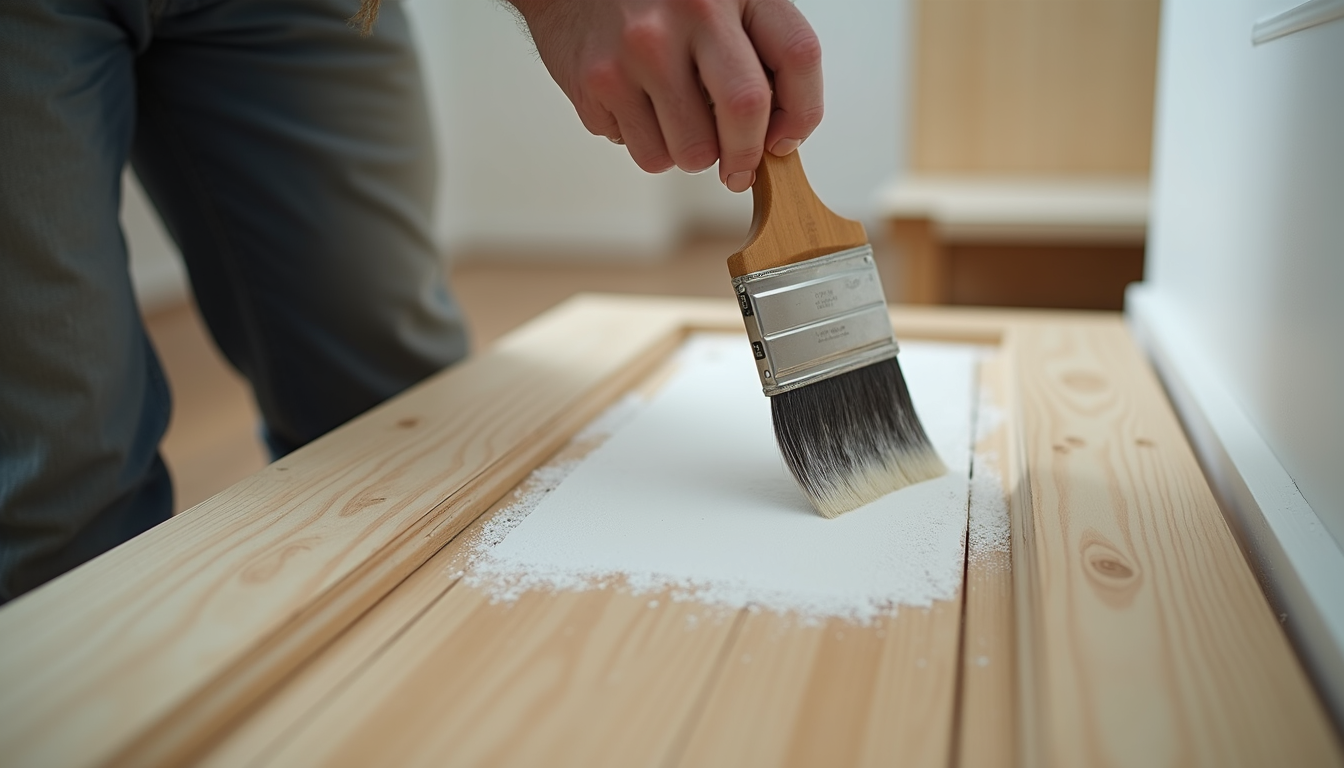
- Stained it once it was ready. A penetrating stain soaked into the boards and railings. That brought the grain back and put the protection into the wood, not on top of it.
The “after” is a deck you’d actually want to stand on. Ready for the next round of humidity and freeze-thaw.
A Faded Backyard Entertaining Deck
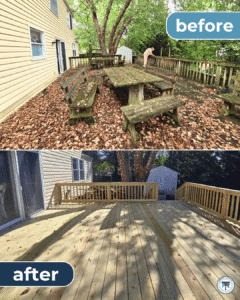
This was a big backyard deck, faded to that flat silvery gray, half-buried under leaves, blending into the woods behind it. A great space for hosting. It had just stopped feeling like a place anyone wanted to host.
Same approach:
- Stripped it back to clean, dry wood and cleared the surface.
- Refinished the boards and railings, then let the wood reach the right condition to accept a finish.
- Stained, not painted. The grain shows. The color is rich instead of chalky. Moisture can still move through the wood the way it needs to.
The “after” speaks for itself. Same boards, same footprint, brought back to life the right way. It’s the kind of restoration our Bethesda painters take on alongside bigger exterior jobs across Montgomery County.
So Why Stain a Deck Instead of Painting It?
Here’s the reasoning behind both calls. It comes down to how each finish behaves on a horizontal surface that lives outside and gets walked on.
Paint sits on top of the wood. It forms a film, a skin over the surface. On a wall, fine. On a deck, that skin gets walked on, rained on, and baked in the sun. Then moisture finds its way in through a crack, and the paint seals it underneath with nowhere to go. Trapped water is how you get peeling, bubbling, and rot. Proper deck sealing exists precisely to keep moisture out and stop rot before it starts.
Stain penetrates the wood. Instead of a skin on top, it soaks into the fibers and protects from within. The wood still breathes. It still releases moisture. That’s why you don’t get the bubbling and peeling that paint gives you on a deck.
A few more reasons I lean stain on nearly every deck:
- It ages gracefully. Stain fades slowly and evenly. Paint fails in patches and flakes, which looks worse and is a bigger job to fix.
- It’s easier to maintain. Recoating stain is simple. Stripping failed paint off an entire deck is a miserable job you don’t want to sign up for.
- It keeps wood looking like wood. Both of these decks show off their grain now. Paint buries all of that under an opaque coat.
- It suits our climate. Maryland humidity and freeze-thaw punish trapped moisture. A finish that breathes is simply the smarter match for what our weather does to wood.
I’ll be fair about it. Paint isn’t useless. On a deck that’s already badly weathered and mismatched, a solid coating can hide a lot and deliver bold color. But for a deck you want to protect and keep, especially one worth refinishing instead of replacing, stain wins the long game almost every time.
The Real Takeaway From Both Decks
Neither deck needed to be torn out. Each one needed the same three things. Honest prep. Patience to let the wood dry. And the right finish for a surface that lives outside and takes a beating. Stain was that finish both times. That’s the difference between a quick cosmetic fix and a deck that lasts, and it’s the same standard we hold on every exterior painting job we take on in Frederick County.
Thinking About Your Own Deck?
Has your deck gone gray and tired? Don’t assume it needs replacing. And don’t let anyone talk you into simply painting over it. We’ll take an honest look and tell you whether yours is a candidate for refinishing and staining.
Chad Heisman, Founder, Precision Paintworks
Frequently Asked Questions
Is it better to stain or paint a deck?
For most decks, staining is the better choice. Stain penetrates the wood and lets it breathe. Paint forms a surface film that tends to peel and trap moisture on a flat, high-traffic surface, which can lead to rot. Both decks in this post were stained, not painted.
Can an old, gray deck really be refinished instead of replaced?
Often, yes. If the boards are still structurally sound, a weathered gray deck can be cleaned, dried, refinished, and stained back to warm, natural wood, as both projects here show. Replacement isn’t always necessary.
How does Maryland’s weather affect the choice?
Maryland humidity and freeze-thaw cycles are hard on wood, and especially hard on trapped moisture. A penetrating stain lets the wood release moisture naturally. That makes it a better match for our climate than a film-forming paint on a horizontal deck surface.