


I'm Chad Heisman, founder of Precision Paintworks. After serving in the military, I built this company in 2021 on a pretty simple idea: your home deserves the same care I'd give my own.
I run a veteran and family-owned painting crew right here in Maryland that has successfully completed over 500 painting projects so far. Got a question about your place? Ask me. I'd rather help you get it right the first time than sell you anything.
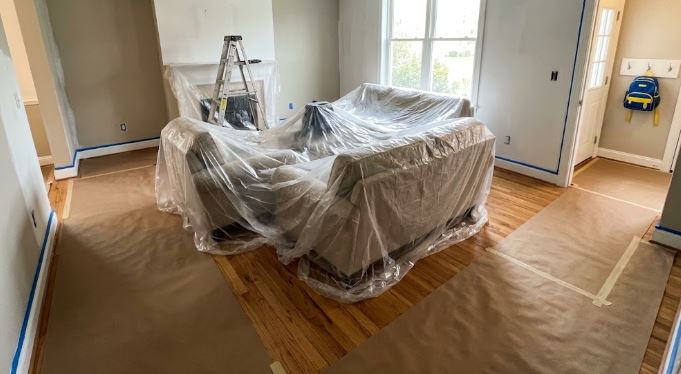
Before any paint goes on, a good painter covers your floors, tapes the trim, wraps your furniture and repairs the walls. That protection keeps your home clean during the job, and the prep underneath it decides how the finish looks for years after.
We filmed one interior repaint at a home in Derwood from the first roll of paper to the last patch, and it shows how painters protect your home before painting better than any list could. Every step below comes from that house, in the order we did it.
You can watch the whole sequence in this short video from the job.
The Floors Get Covered First
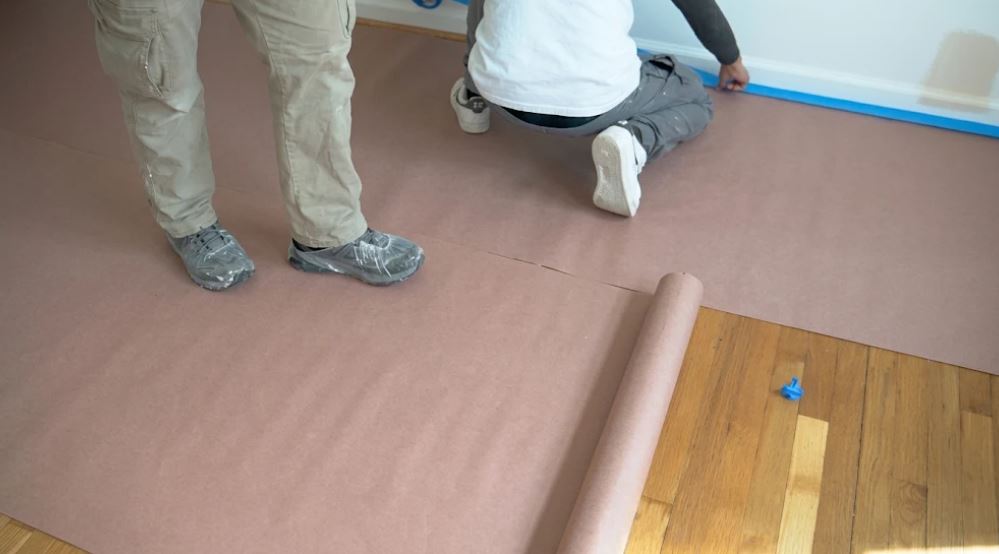
Nothing else starts until the floor is protected, because every later step happens on top of it. Area rugs get rolled up and carried out first. In Derwood, the rooms had hardwood, so we rolled heavy brown paper across them from wall to wall and taped the seams so nothing could slip through. Paper lies flat, soaks up a stray drip instead of letting it run, and doesn’t slide around when people walk on it all day.
Good floor protection for painting also means keeping grit off it. Anyone working in the room wore shoe covers, so dirt from outside never got ground into the paper or carried into the rest of the house.
Tape Draws the Line Between Wall and Trim
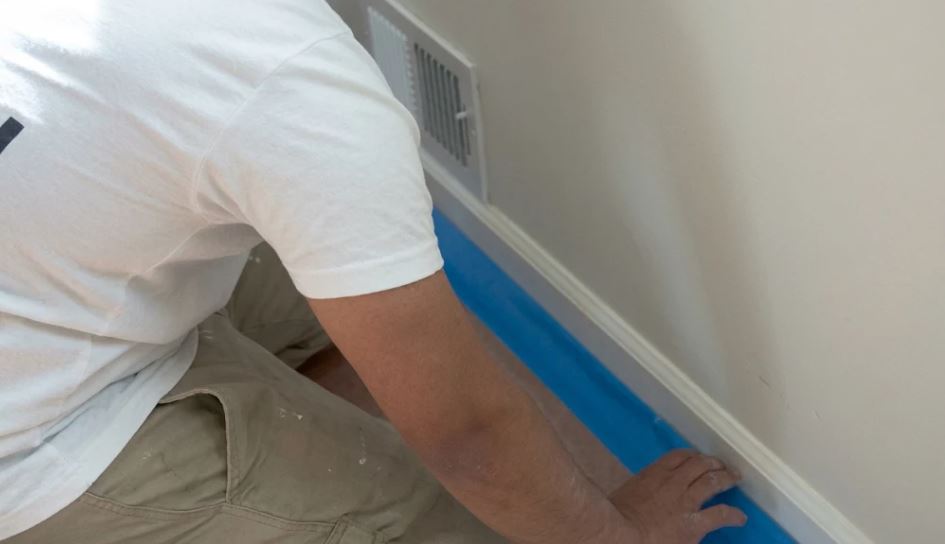
Once the floor was down, the baseboards came next. Taping baseboards before painting keeps the wall color off the trim and catches spatter from the roller as it works low on the wall. We ran the tape along the top edge of each baseboard, then pressed every strip down by hand so paint couldn’t creep underneath. On trim that was painted recently, we use a gentler tape so it won’t pull the existing finish when it comes off.
Small things get the same care. One baseboard in that house ran right up to a wall vent, so the tape followed it closely there instead of stopping short.
Furniture Stays Put and Stays Clean
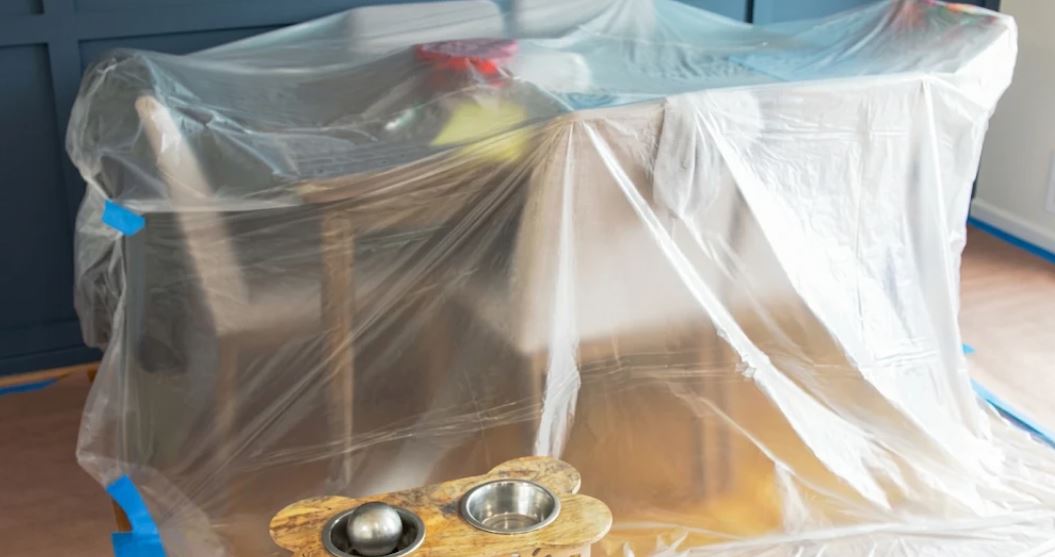
Not everything can leave the room. Big pieces get grouped together and covered instead, which is what we did with the dining table and chairs. Protecting furniture during painting means wrapping the pieces in clear plastic sheeting and taping it down at the floor, so dust from sanding and fine roller mist can’t drift underneath.
Wall Repairs Happen Before the Roller Comes Out
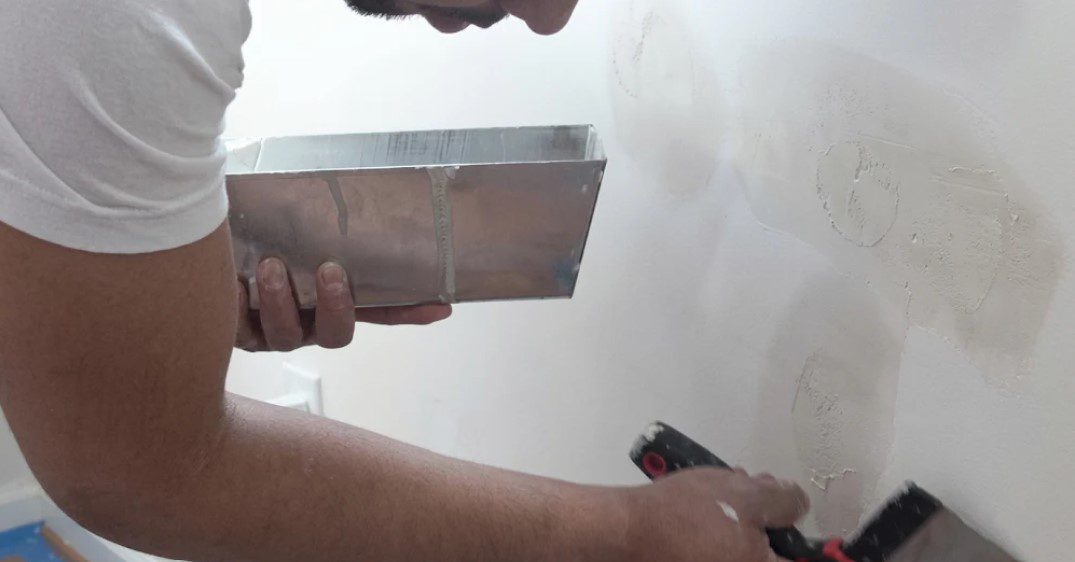
With the room covered, we turned to the walls. Outlet covers and switch plates came off first, so every wall could be repaired and painted edge to edge. Patching walls before painting in that house meant dealing with nail holes from old pictures and a few dents near a doorway where furniture had bumped the drywall over the years. None of it was serious, but fresh paint makes every flaw easier to see, not harder.
We loaded joint compound from a mud pan, pressed it into each spot and pulled it flat with a wide knife so it sat level with the wall. After sanding, we ran a hand and a work light across each repair. A patch that sits even slightly proud of the wall throws a shadow once paint goes over it.
Paint Is the Last Step, Not the First
Those painting preparation steps took most of the first day in Derwood. The painting that followed used quality paint and two full coats, and it went quickly because nothing underneath needed fixing anymore. Skipping prep rarely saves time on a job like this. It just moves the work to the cleanup or to a callback a few months later. If you’re planning around the work, our notes on staying home during a repaint cover the day-to-day side.
When you talk to any painter, ask how they’ll cover your floors, what they tape, how furniture is handled and who moves it, and how wall repairs are done. Clear answers to those questions say a lot about the finish you’ll get. They’re the same steps we follow on every one of our interior painting jobs.
FAQ
Do I need to move my own furniture?
Usually not. We move and group most pieces ourselves and cover them in place. It helps if you clear small items, lamps and anything fragile from the rooms beforehand, since those are easier to pack yourself.
Is carpet covered the same way as hardwood?
Not quite. Carpet usually gets drop cloths or a plastic film made to stick to it, rather than paper, so the covering doesn’t shift as people walk across it.
What should I put away before the crew arrives?
Take down wall art, mirrors and curtains, and store anything breakable or valuable. Clearing shelves and countertops in the work rooms saves time and keeps your things from being handled by anyone but you.
How do pets fit in?
Keep them in a closed room away from the work area if you can. Covered floors, tape and open paint cans are tempting to curious animals, and paw prints are much easier to prevent than clean up.
Can tape pull off fresh paint on the trim?
It can if it’s removed carelessly. We pull tape slowly at a low angle and score any edge that has bonded to the wall, so the line stays clean and nothing lifts.
A Covered Room Is a Good Sign
If your painter shows up and starts with paper, tape and plastic, you’re in good hands. If they open a can first, it’s worth asking why. To see what a properly prepped job would look like in your own home, talk to us about your rooms.