


I'm Chad Heisman, founder of Precision Paintworks. After serving in the military, I built this company in 2021 on a pretty simple idea: your home deserves the same care I'd give my own.
I run a veteran and family-owned painting crew right here in Maryland that has successfully completed over 500 painting projects so far. Got a question about your place? Ask me. I'd rather help you get it right the first time than sell you anything.
Painting brick is not a bad idea by default, but it turns into one when the brick is damaged, full of salt, historic, too new, or coated with paint that traps water. On solid, dry brick with the right prep and a breathable masonry paint, it holds up well, and I paint brick homes across Maryland.
The whole question comes down to water. Brick soaks up rain and dries back out through its face. Regular house paint can seal that face, so the water stays inside. In a Maryland winter, that trapped water freezes, swells and pushes the paint off, and sometimes the face of the brick comes off with it. That’s where the “never paint brick” warnings come from.
When Painting Brick Is Fine and When It Isn’t
So is painting brick a bad idea for your house? I say no, or not yet, when:
- the brick faces are flaking or crumbling
- white salt keeps showing up
- mortar joints are loose or missing
- a gutter or downspout keeps part of the wall wet
- the home is historic
- the brick went up less than a year ago
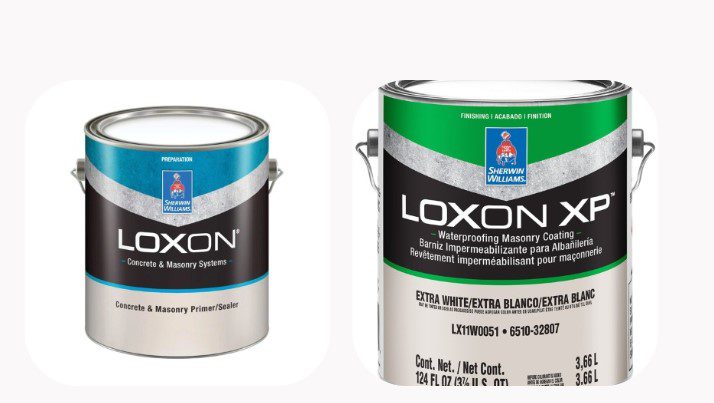
When none of those apply, paint is a fair choice. The paint itself matters as much as the brick. I use a masonry primer and a breathable masonry paint made for brick, not the same paint that goes on wood siding, so moisture can still escape.
What I Check Before Saying Yes
To confirm whether the brick is actually ideal for painting, I run these tests:
- Run my hand across the wall to see if powder or sand rubs off.
- Press on mortar joints to find soft spots.
I spend the most time low on the wall, near the ground, downspouts and walkways, because water and salt show up there first. On homes built before 1978, any old paint gets tested for lead before I scrape or sand anything.
Does Painted Brick Peel in Winter
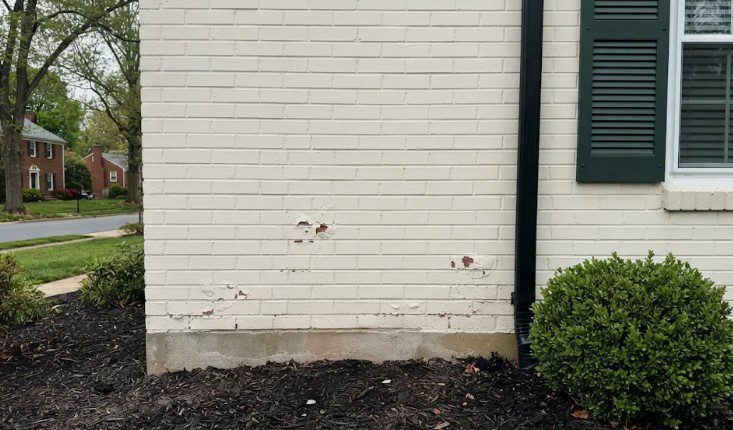
It can, and it almost always starts where water collects. That’s exactly what we ran into on a house in Frederick, where paint had started flaking off in small spots along the lowest courses, right above the foundation and on both sides of the downspout. The owners called in April 2026 after a cold winter, wondering if painting the brick years ago had been a mistake.
The paint wasn’t the real problem. The downspout emptied at the base of the wall, so that corner stayed damp. Water got behind the paint, froze at night, and lifted it a little more with every freeze. These are the same causes behind most peeling paint: water behind the film, a weak bond, or old layers giving out. Painting over it would have failed again by spring.
We had the downspout extended away from the house and gave the wall time to dry before repainting.
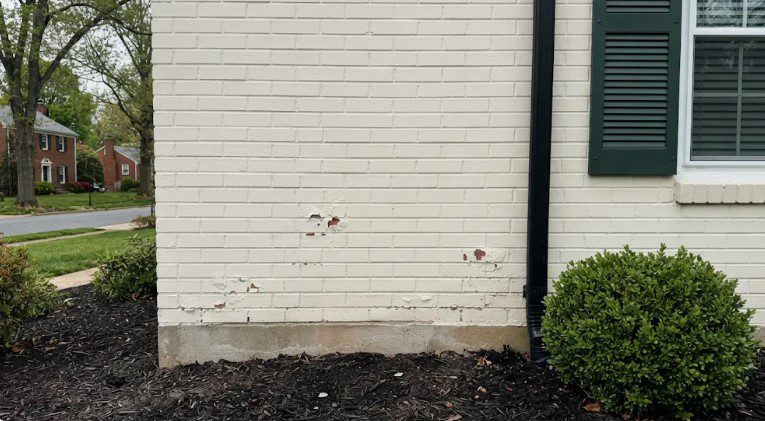
Cold weather doesn’t make good paint fall off. It finds water that’s already behind the paint and makes the damage show up faster.
Can You Paint Brick With Efflorescence
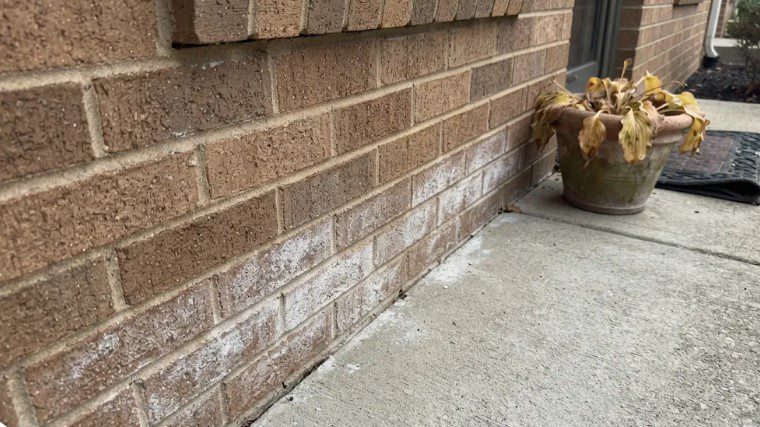
Not until you know why the salt is there and it stops coming back. Efflorescence is salt carried out of the brick by water. When the water dries at the surface, the salt stays behind as white powder. Paint over it, and the salt keeps pushing from behind until the paint bubbles and flakes.
I had this exact talk with a homeowner in Columbia who was all set to paint their brown brick front, until we crouched down by the concrete walk and saw the bottom few courses dusted in white powder. That told me water was getting into the base of the wall. The walk sloped slightly toward the house, so rain ran against the brick and soaked upward.
I told them to fix the slope first, and we held off on paint. After the walk was corrected, the salt was dry-brushed off and we checked the wall again after a few weeks of rain. We only scheduled the painting once the powder stopped coming back. If salt keeps returning, I tell people to leave the brick unpainted.
How Long to Wait Before Painting New Brick
New brick and mortar carry a lot of water from construction, and they often push out salt in their first months. I wait about a year before painting new brick, then check it for dampness and salt before I start. Painting too early seals that water in, and you get the same peeling and bubbling as a wet wall.
Can You Paint Brick on a Historic Home?
Sometimes, but this is where I’m the most careful. Older brick is often softer, and older mortar is often lime-based, so both need to breathe more than modern brick does. If your home is in a historic district, check with your local district office before planning any exterior change. If original brick has never been painted, I usually suggest keeping it that way. If it was painted long ago, a lead test comes before any prep.
How Often Does Painted Brick Need to Be Repainted
That depends more on prep and water control than on the paint itself. On brick that was cleaned, primed and given two coats, and that stays dry, I plan on about 7 to 10 years between repaints. Walls that face the sun and spots near gutters wear out first.
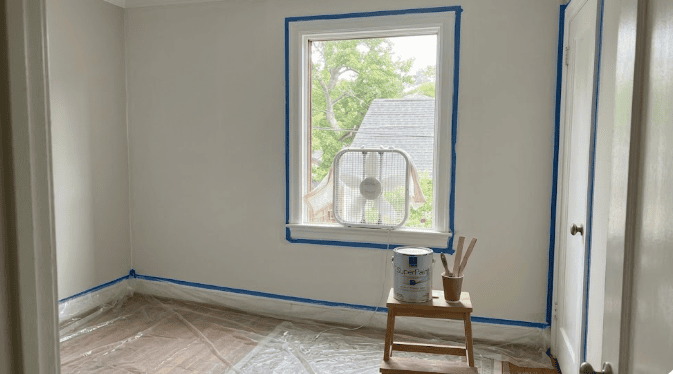
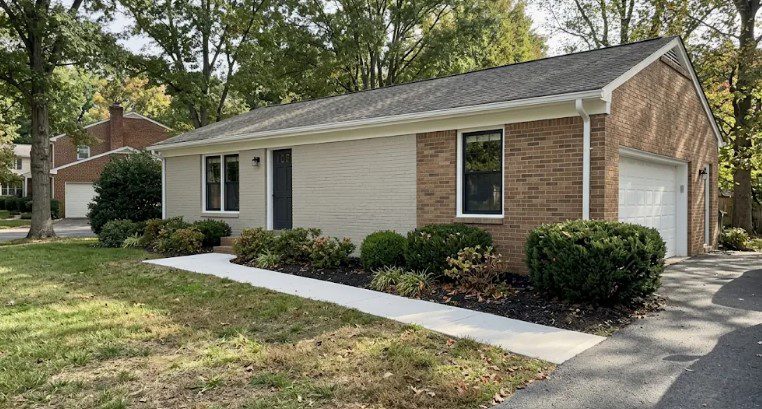
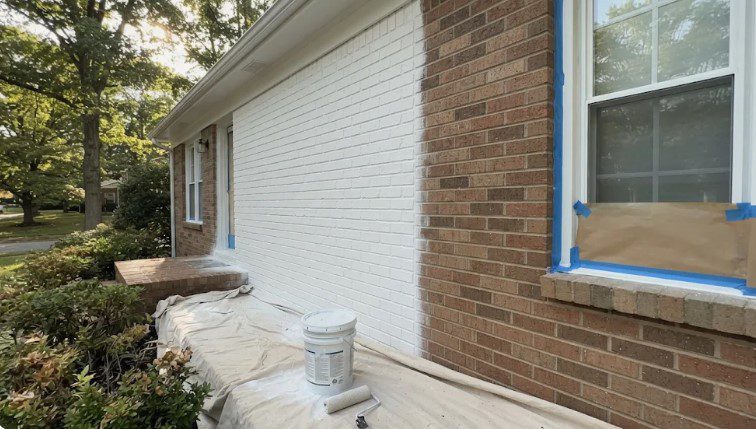
Sometimes the brick simply checks out. That was the case at a ranch house we painted in Rockville: solid faces, tight mortar, and not a trace of salt on any wall. We washed the brick and let it dry, masked the windows with tape and paper, rolled on masonry primer, and followed with two coats of breathable masonry paint.
That setup is what stretches the time between repaints. Upkeep after that is simple: rinse the walls once a year, touch up chips before water gets in, and keep gutters and downspouts working.
How to Decide If Your Brick Should Be Painted
Start low on the wall. If you see white powder, flaking brick faces or crumbling mortar, deal with the water and the masonry first, then decide. If the brick is less than a year old, wait. If the house is historic, check your district’s rules and lean toward leaving original brick alone.
If the brick is sound and dry, and you’re fine with some upkeep every several years, paint is a good option. Just treat it as long term, because taking paint off brick later is slow and hard on the surface. Our exterior painting service starts with that same check, before color ever comes up.
FAQ
Can paint be taken off brick later?
It can, but it’s slow and hard on the surface. Stripping usually means chemical removers and careful washing, and some masonry never looks quite the same afterward. I treat any coating on masonry as a long-term choice.
Does paint help keep water out of brick?
Not much. A breathable masonry coating sheds some rain, but it’s made to let moisture escape, not seal the wall. Bad gutters, cracked mortar or soil sloping toward the house still need fixing first.
Should I limewash instead of paint?
Limewash soaks into masonry instead of forming a film, so it breathes well and wears away slowly. It suits softer, older walls. It needs refreshing more often, and it looks softer and chalkier than a painted finish.
Do I need to fix mortar before painting?
Yes, if joints are cracked, sandy or missing. Paint won’t hold loose mortar together, and gaps let water slip behind the coating. I have repointing done first and give the new mortar time before priming.
Does a painted exterior affect resale?
It can go either way. A clean, well-kept coat can freshen a dated house, while flaking paint makes buyers worry about moisture. Condition matters more than color, so stay on top of touch-ups before you sell.
Not Sure About Your Own Brick?
The quickest way to know is to have someone look at the wall up close. I’ll check it low and high and tell you straight whether it’s ready for paint, needs work first, or is better left alone. You can book a visit whenever it suits you.