


I'm Chad Heisman, founder of Precision Paintworks. After serving in the military, I built this company in 2021 on a pretty simple idea: your home deserves the same care I'd give my own.
I run a veteran and family-owned painting crew right here in Maryland that has successfully completed over 500 painting projects so far. Got a question about your place? Ask me. I'd rather help you get it right the first time than sell you anything.
How to stop paint from peeling comes down to one step most repaints skip: find out why it let go. On Maryland homes, the cause is almost always one of three things. Water may be getting behind the paint. The paint may never have bonded to what was under it. Or old layers may be failing underneath.
Fix that cause first. Then scrape back to paint that’s firmly attached, clean, prime and repaint. Skip the cause, and the peeling comes back.
How We Figure Out Why Paint Keeps Peeling
Why does my paint keep peeling? Because whatever caused it the first time is still there. New paint over an old problem just gives that problem a fresh surface to push off.
So every answer to how to stop paint from peeling starts with telling the three causes apart. You can usually do that in a few minutes:
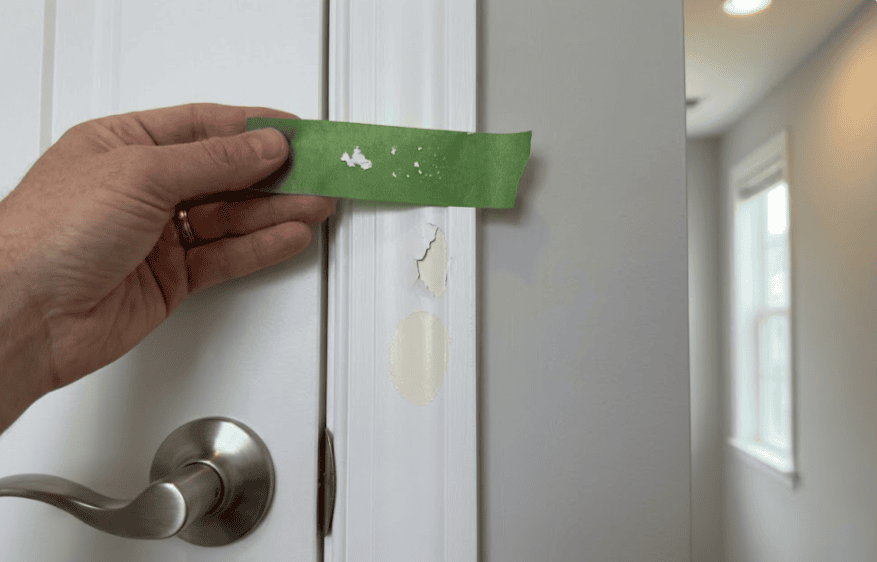
The tape test is simple. Press a strip of painter’s tape on a sound-looking area next to the peel and pull it off fast. If paint comes with it, the bond is the problem, not just the spot you can see.
How We Tracked Down a Sill That Kept Peeling
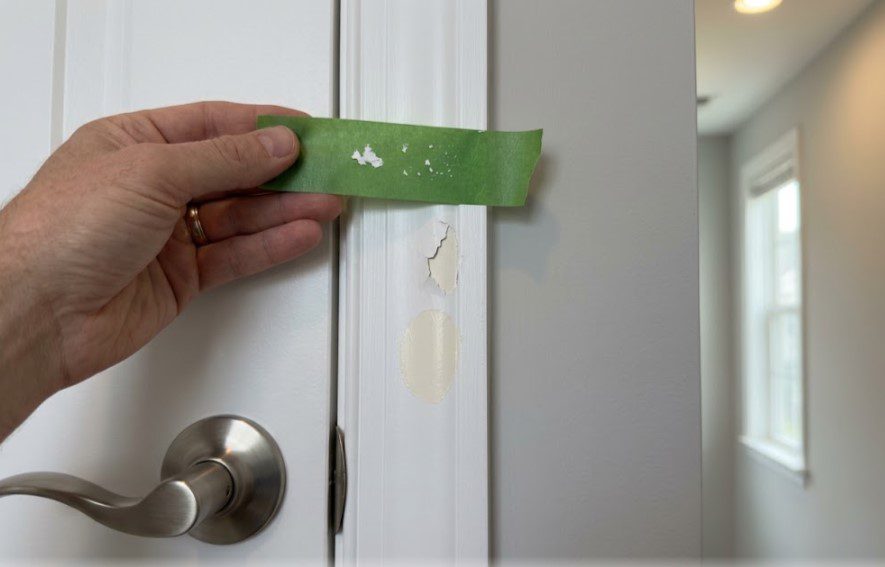
A homeowner in Clarksburg called us about a window sill that had been repainted by a handyman about 8 months earlier. The paint was lifting again at the same corner, right down to bare wood.
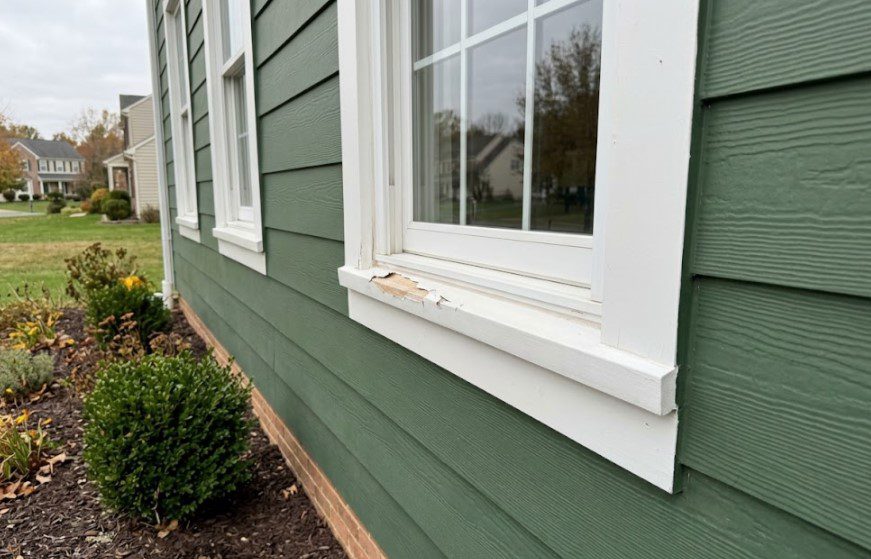
Up close, the reason wasn’t hard to find. The joint where the sill meets the side casing had opened into a crack, and the bottom of it was stained dark. Every rain sent water into that gap, behind the paint and into the wood. The earlier repaint covered the peel but never closed the joint, so the water kept pushing the new paint off from behind.
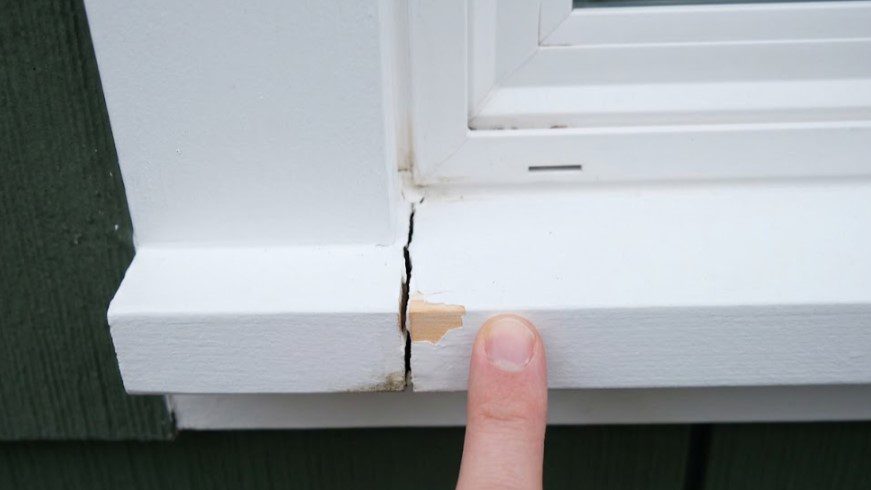
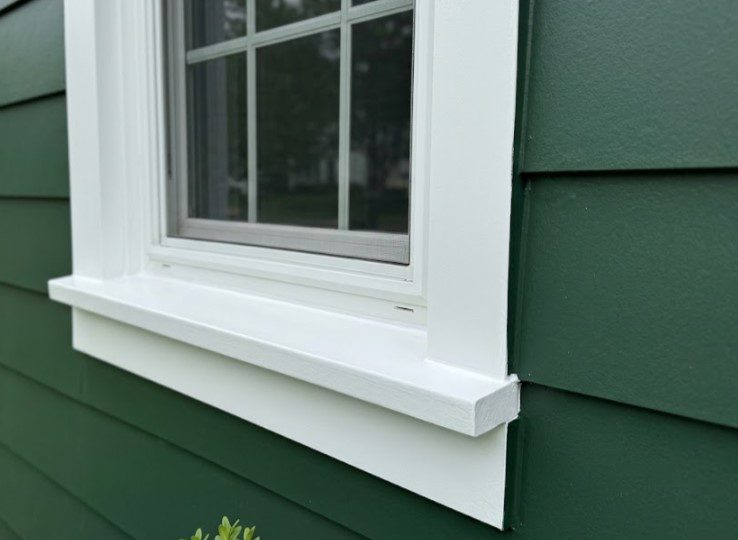
We let the wood dry out, filled the damaged corner with epoxy wood filler, sealed the joint where the sill meets the casing, primed and finished with two coats of Sherwin-Williams Emerald Exterior Acrylic Latex in satin. The paint took the blame, but the water did the damage.
How We Deal With Water Behind the Paint
Paint can keep rain off the outside of a surface, but it can’t hold back water coming from behind. Outside, that water usually gets in through failed caulk at trim joints, overflowing or leaking gutters, or wood sitting too close to soil or mulch. Inside, it’s steam from a shower without a working fan, or a damp basement wall.
Maryland winters make it worse. Water that gets into wood or a crack freezes, expands and thaws over and over, and each cycle pries the paint a little further loose. That’s why exterior peeling often shows up in spring.
The fix is always to stop the water first: recaulk the joints, fix the gutter, add or repair the bath fan, deal with the basement moisture. Steam is the same problem indoors, and it’s why so many bathroom ceilings peel even when the paint itself was fine.
Only once the wood or drywall is dry do we scrape, prime and repaint.
How We Get Paint to Bond the First Time
When paint peels off in sheets, often with a smooth, clean back, it was never really stuck. The usual reasons are latex rolled over old oil-based or high-gloss paint, paint over dust, grease or chalky residue, or bare wood and drywall painted without primer.
If you’re not sure whether old trim is oil-based, rub a small spot with a cotton ball and rubbing alcohol. Latex softens and comes off on the cotton; oil-based paint doesn’t.
On glossy or oil-based surfaces, we clean first, scuff-sand until the shine is gone, wipe off the dust, and prime. That primer gives the topcoat something to grip. Skipping it is a common shortcut on repaints that fail early, and it’s the cheapest one to avoid.
When We Strip Old Layers Back
On older Maryland homes, it’s normal to find several coats of paint stacked on trim and siding. Eventually the bottom layers lose their grip, and the whole stack lifts together in thick, brittle flakes. Look at the edge of a flake and you’ll see the history in colored bands.
No new coat can fix that, because the new paint is only as strong as the layer it sits on. If scraping keeps finding more loose paint instead of reaching a firm edge, the area needs to come back to a sound surface before anything else goes on.
How We Repaint So It Doesn’t Come Back
If you’re wondering how to prevent paint from peeling the next time, the order matters as much as the steps:
- Fix the cause: the water, the bond, or the failing layers.
- Scrape until you reach a firm edge, then feather-sand it so the new paint lies flat.
- Clean off dust, dirt and chalk.
- Spot-prime bare wood and drywall, and use a bonding primer on anything glossy.
- Finish with two coats of quality paint. We use Sherwin-Williams Emerald and Benjamin Moore Aura.
FAQ: Questions We Get About Peeling Paint
Can I just paint over peeling paint?
No. The new coat grabs the loose paint and comes off with it, usually within a season, so scrape back to a firm edge and fix the cause first.
Does primer stop paint from peeling?
Primer is a big part of how to prevent paint from peeling when the problem is a weak bond. It won’t help if water is getting behind the paint or the old layers underneath are failing.
Is peeling paint in an older home dangerous?
It can be. If the house was built before 1978, it may contain lead paint, so have it tested before anyone scrapes or sands it.
Let Us Find the Cause First
When we look at peeling paint, we start with why it let go, not with a paint color. Every repaint we do is backed by our transferable 3-year workmanship warranty. Ask for a free estimate and we’ll tell you what’s behind the peeling before we quote the fix.