


I'm Chad Heisman, founder of Precision Paintworks. After serving in the military, I built this company in 2021 on a pretty simple idea: your home deserves the same care I'd give my own.
I run a veteran and family-owned painting crew right here in Maryland that has successfully completed over 500 painting projects so far. Got a question about your place? Ask me. I'd rather help you get it right the first time than sell you anything.
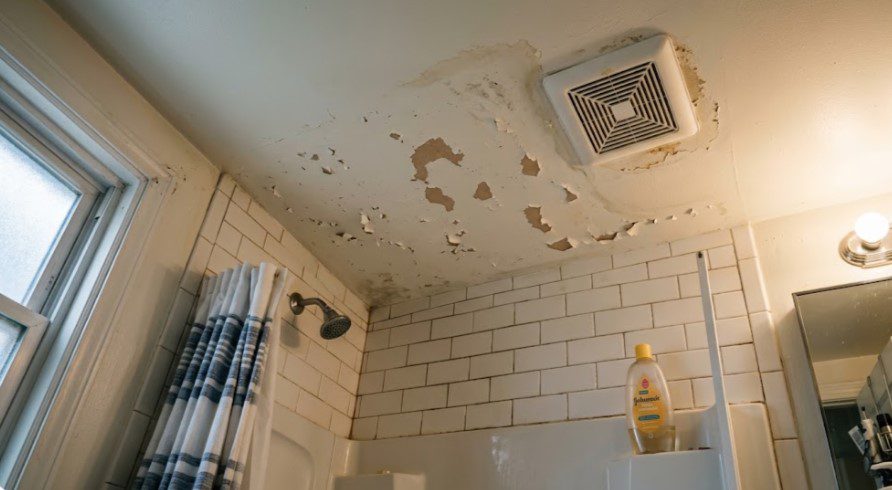
Bathroom ceilings peel because trapped steam breaks the paint’s bond. It is a moisture and ventilation problem, not a paint problem, and the lasting fix is better airflow plus proper prep and moisture-resistant paint.
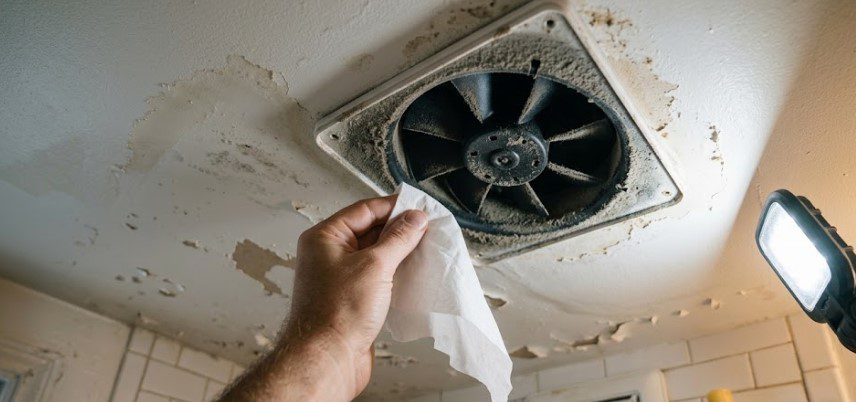
Steam from hot showers condenses on the coolest surface in the room, which is usually the ceiling. When the exhaust fan is missing, undersized, clogged, or vented into the attic, humidity stays above 50 percent and the film lifts. Painting over a glossy or dirty ceiling, skipping primer, or using regular flat wall paint makes it fail even faster. A roof or plumbing leak from above is less common but more serious.
Why Bathroom Ceilings Peel
Peeling paint almost always traces back to a moisture problem, not the coating itself. Indoor humidity should stay between 30 and 50 percent. Long hot showers without a working fan push it well past that. The fan must be sized for the room (about 1 CFM per square foot) and it must duct to the exterior, never into the attic. Run it during the shower and for about 20 minutes after.
Here is the cause-to-fix table we use on bathroom estimates across Maryland, DC, and Northern Virginia:
| Cause of Peeling | Why It Happens | How We Fix It |
|---|---|---|
| Poor or no ventilation | Fan too small, clogged, or dumps into the attic | Install or upgrade a properly sized fan that vents outside |
| High humidity above 50% | Long hot showers, fan not run after | Run the fan during and 20 minutes after showers |
| Wrong paint or no primer | Flat wall paint or unprimed ceiling | Stain-blocking moisture-resistant primer plus 2 coats of bathroom paint |
| Painting over dirty or glossy surface | Poor adhesion from the start | Scrape, sand, clean, then prime |
| Roof or plumbing leak | Water from above, not steam | Repair the leak first, then treat mold and replace damaged drywall |
| Old peeling layers | Multiple failed coats stacked on each other | Remove everything down to a sound surface |
A clogged fan is one of the first things we check. Dust and lint cut airflow to almost nothing even when the unit sounds like it is running.
How to Fix Peeling Paint on a Bathroom Ceiling
You cannot paint over peeling ceiling paint. The loose film will lift the new coat, often within a year. The sequence that actually lasts is:
- Confirm and fix ventilation. Dry the room completely.
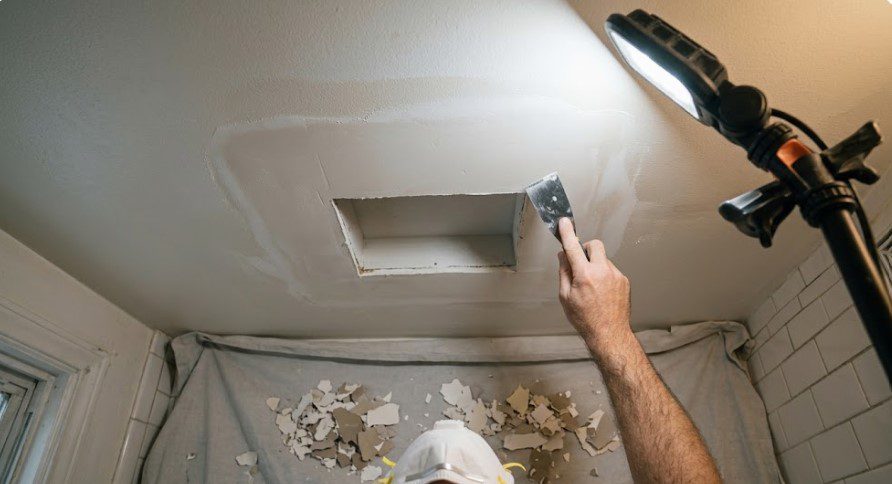
- Scrape all loose and peeling paint down to a firm surface.
- Sand and feather the edges.
- Treat any mold with the right cleaner. Large areas need a professional.
- Repair soft or damaged drywall or plaster.
- Prime with a stain-blocking, moisture-resistant primer.
- Apply two coats of mildew-resistant bathroom paint in satin or semi-gloss.
- Keep showers short and run the fan extra until the paint fully cures.
All loose material has to come off. Skipping the scrape is the most common DIY mistake we later get called to redo.
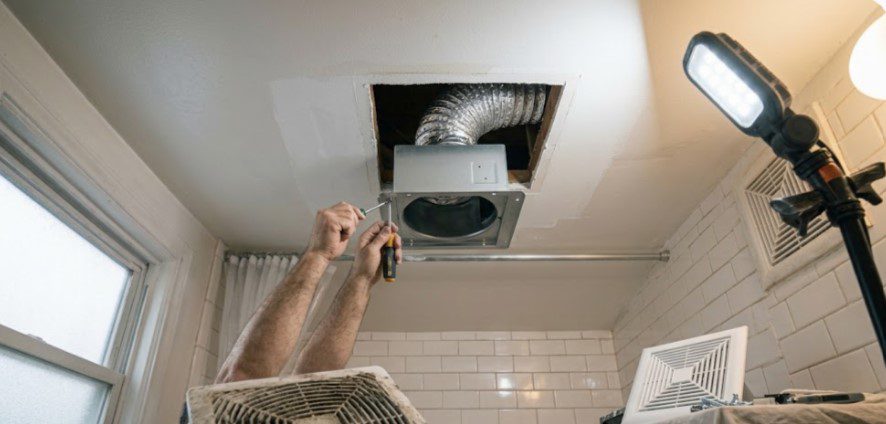
Once the ceiling is sound, the fan itself often needs to be replaced. Older units are frequently too small or vented into the attic, which dumps moisture into the insulation and makes the peeling return.
The Right Paint and Sheen for Bathroom Ceilings
Use mildew-resistant bathroom paint, never regular flat wall paint. Satin or semi-gloss sheds moisture better than flat and wipes clean. Two coats over the right primer give the film the thickness it needs. The wrong sheen is one of the fastest ways a ceiling fails again.
When It Is a Leak or Mold Problem, Not Just Paint
Recurring peeling, brown or yellow stains, sagging drywall, or a musty smell mean water is coming from above or mold is already present. Do not disturb large mold areas yourself.
If the home was built before 1978, the paint may contain lead. Do not dry-sand it. Have it tested and hire a certified contractor. We follow EPA rules on every older home.
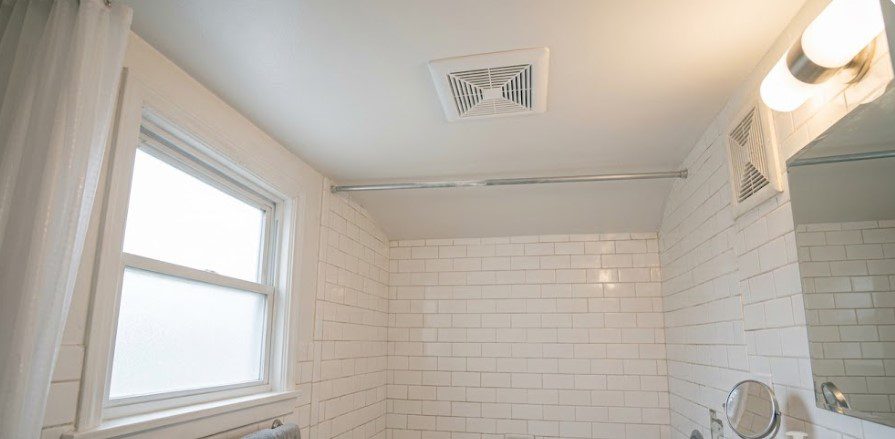
If the peeling keeps coming back, the problem is not the paint. We will check the fan, humidity, and ceiling and give you a free estimate across the DMV. Our crew handles the prep, primer, and bathroom-rated coats. We can handle the painting and the ventilation upgrade if needed. All work carries our 3-year warranty.
Frequently Asked Questions
Why is my bathroom ceiling paint peeling?
Trapped steam and high humidity break the paint’s bond. Poor ventilation is the usual cause, not the paint itself.
How do I fix peeling paint in a bathroom ceiling?
Scrape all loose paint, sand, treat mold if present, repair drywall, prime with a moisture-resistant primer, and apply two coats of bathroom-rated paint. Fix the fan first or it will peel again.
Can you just paint over peeling bathroom ceiling paint?
No. The loose paint will lift the new coat. You must scrape, prime, and fix the moisture source first.
What is the best paint for a bathroom ceiling?
Mildew-resistant bathroom paint in satin or semi-gloss over a moisture-resistant primer. Flat paint fails quickly in steam.
Does a bathroom need an exhaust fan?
Yes. The fan must be sized correctly, vented outside, and run during plus 20 minutes after showers to keep humidity between 30 and 50 percent.
Is peeling bathroom paint a sign of mold?
It can be, especially with stains, sagging, or a musty smell. Small areas can be treated. Larger ones need professional assessment.
How do I stop bathroom ceiling paint from peeling again?
Fix or upgrade the exhaust fan, keep humidity in range, use the right primer and bathroom paint, and never skip prep.