

The real fix is under the paint, not on top of it. Scrape back to sound wood, prime the bare spots, then repaint. No shortcut coating undoes bad adhesion. Done right, it lasts. Done fast, you’re looking at the same peeling column by next summer.
One of the most common calls I get sounds like this. “Chad, most of my house looks fine, but one section is a mess.” Nine times out of ten, that mess is exterior paint peeling on the sunny side of the house. It’s not random. It’s physics.
Let me walk you through a real one we handled, start to finish, because it shows exactly what causes it and exactly how you fix it for good.
What We Walked Up To
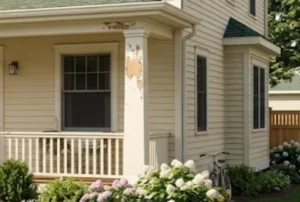
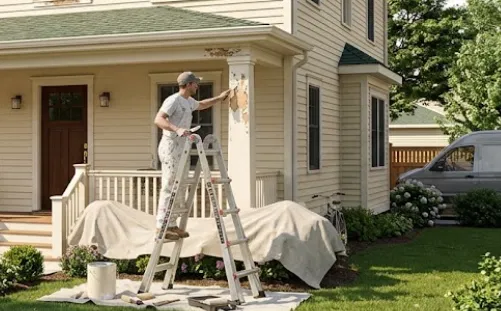
The house itself was in good shape. Clean lines, nice landscaping, a welcoming front porch. Then your eye hits the porch column and the trim above it.
The paint was blistered and flaking off in sheets. Big patches of bare wood showing through where the finish had simply let go. Everywhere else on that elevation still looked okay. But this one column, standing tall and catching direct sun most of the day, had taken the worst of it.
That pattern tells you almost everything before you even get up the ladder. When one vertical surface fails while the siding around it holds, the sun is usually the first suspect.
Why Is My House Paint Peeling?
When paint lifts off a wall, the paint film almost never failed on its own. Something underneath it, or above it, set it up.
On a sun-facing surface, the chain of events goes like this:
- UV breaks down the binder. The binder is the glue that holds paint together and holds it to the wood. Sunlight slowly cooks it. Manufacturers and painters alike point to UV damage as the main reason south and west walls chalk, fade, and fail first.
- Heat blisters the film. Paint that ever got applied to a hot surface, or in direct sun, skins over before it can bond. Those weak spots blister when the wall heats up.
- Moisture finishes the job. Once a blister pops, water gets behind the edges. The sun dries those edges, they curl, and the bare spot spreads a little more with every cycle.
Add our Maryland weather to that. Hot, humid summers. Freeze-thaw winters. A column in full sun lives through the most extreme version of all of it. So it goes first. That’s not a bad paint job in every case. Sometimes it’s just the sunny side doing what the sunny side does, faster than the rest of the house.
The trap is thinking you can slap a fresh coat over it and move on. You can’t. New paint over flaking, chalky, unsound paint has nothing to grab. It’ll fail again, and usually faster than the coat before it.
How We Fixed It
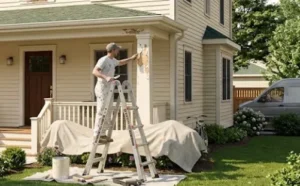
Fixing peeling exterior paint in Maryland the right way is not glamorous. It’s mostly prep. Here’s what we did on this column and trim.
- Scraped back to sound wood. Every loose, blistered, and flaking bit came off. You keep going until what’s left is stuck down tight and stable. No lifting edges left behind to spread later.
- Sanded the transitions. Where sound paint met bare wood, we feathered the edges smooth so the repaint wouldn’t telegraph every old boundary.
- Primed the bare spots. Bare wood drinks up moisture and won’t hold a topcoat on its own. A proper primer seals it and gives the new paint something real to bond to. Skip this and you’ve wasted the whole job.
- Repainted in the right conditions. We didn’t brush a topcoat onto a column baking at midday. Paint that goes on a hot surface is half the reason these failures happen in the first place.
Notice the drop cloths and the deliberate pace in that progress shot. That’s not us being slow. That’s the part that makes the difference between a fix and a redo.
The Result
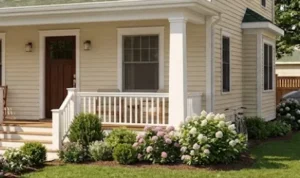
Clean column. Crisp trim. A porch that looks cared for again instead of neglected. Same house, same wood, just handled properly.
And here’s what matters more than how it looks on day one. Because we chased the actual cause instead of hiding it, that column won’t be flaking again next season. The fix goes as deep as the failure did.
What I Tell Homeowners After a Repair Like This
A few honest things worth knowing:
- Expect the sunny side to age faster. It always will. That’s normal, not a defect. Keeping an eye on south and west walls means you catch small failures before they turn into bare wood.
- Color plays a role. Darker colors absorb more heat and take more of a beating from the sun. Lighter shades tend to hold up a little longer on high-exposure walls.
- Prep is the whole ballgame. If a painter quotes you a repaint and barely mentions scraping, sanding, and priming, that’s your warning. The coat is the easy part. What goes under it decides how long it lasts. It’s the same standard we bring to every exterior painting job across Frederick County.
Seeing Peeling on Your Own Home?
If one side of your house is flaking while the rest looks fine, don’t wait for it to spread. Catching it early usually means a smaller, simpler repair. Our Bethesda painters and crews across Montgomery County see this exact failure all the time, and we’ll tell you straight whether you’re looking at a spot repair or something bigger.
Call me at (240) 406-8440 or email info@precisionpaintworksdmv.com for a free estimate. Let’s stop the peeling before it takes the whole wall.
Chad Heisman, Founder, Precision Paintworks (MHIC #156360)
Frequently Asked Questions
Why is only one side of my house peeling? Usually it’s the sunny side. South and west-facing walls take the most UV and heat throughout the year, which breaks down the paint’s binder faster than on shaded sides. When one elevation fails while the rest holds, sun exposure is the most common cause.
Can I just paint over peeling exterior paint? No. New paint needs a sound, stable surface to bond to. Painting over flaking or chalky paint gives it nothing to grip, so it fails again, often faster. The loose paint has to be scraped back and bare spots primed first.
How do you fix paint peeling on a sun-facing wall? Scrape back to sound wood, sand the edges smooth, prime any bare areas, and repaint in the right conditions rather than on a hot surface in direct sun. Fixing the cause underneath is what keeps it from coming back.