

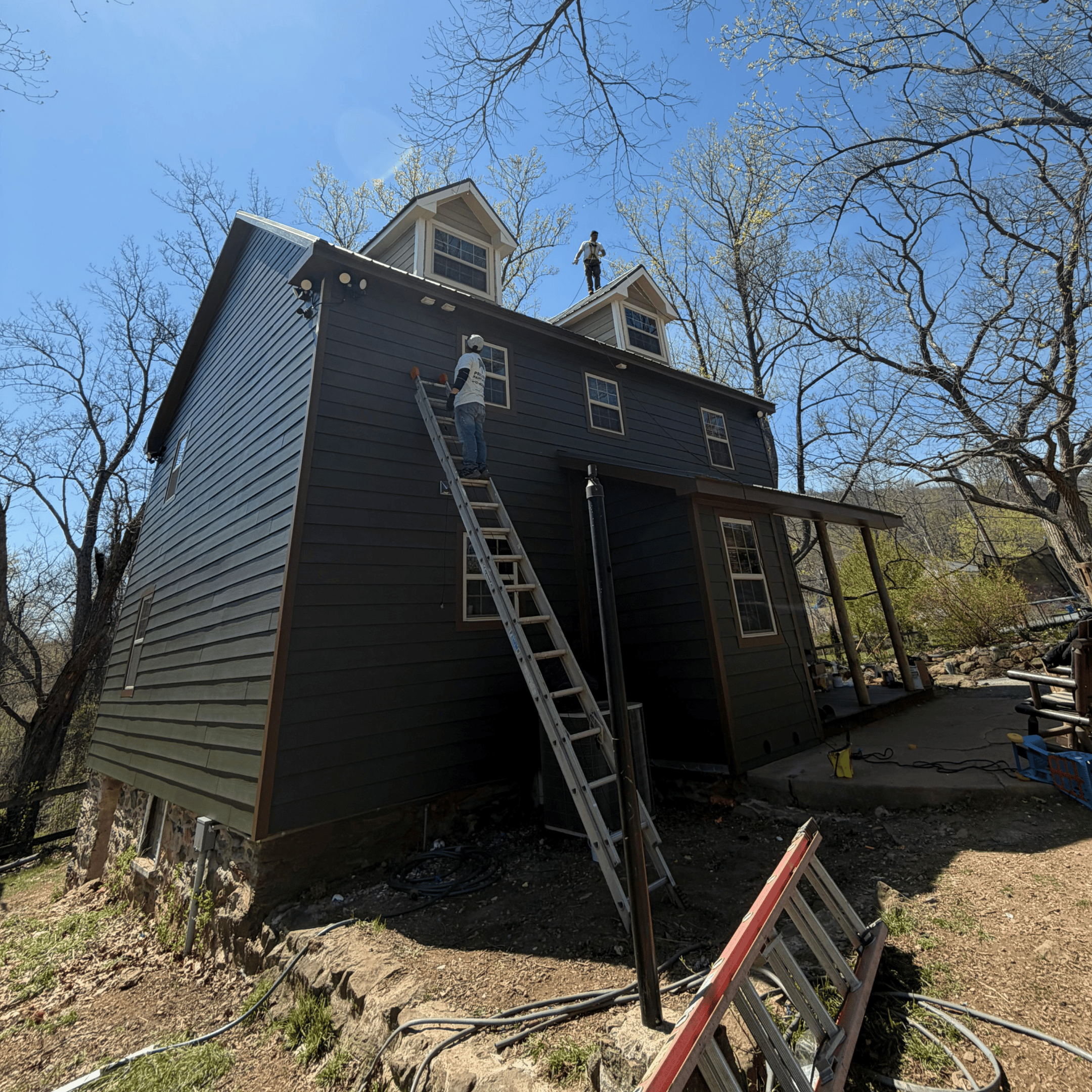
The most common signs of a bad paint job are skipped surface prep, missing primer, too few and too-thin coats, low-grade paint in the wrong sheen, and sloppy lines with drips and missed spots. Each one traces back to a low bid, and each one shows up early. A cheap paint job almost always costs more to fix than it saved.
After enough years on ladders across Maryland, you start to recognize a rushed job before you even touch the wall. Homes that were painted too cheap share the same handful of tells, and they all point back to corners cut to hit a low number. Learning to spot them is the best way to avoid paying for the same job twice.
None of this is about blaming homeowners who took the lowest bid. It is about showing you what a cheap paint job actually leaves behind, so you can protect your home next time. It is the opposite of the meticulous prep behind every residential painting project we take on.
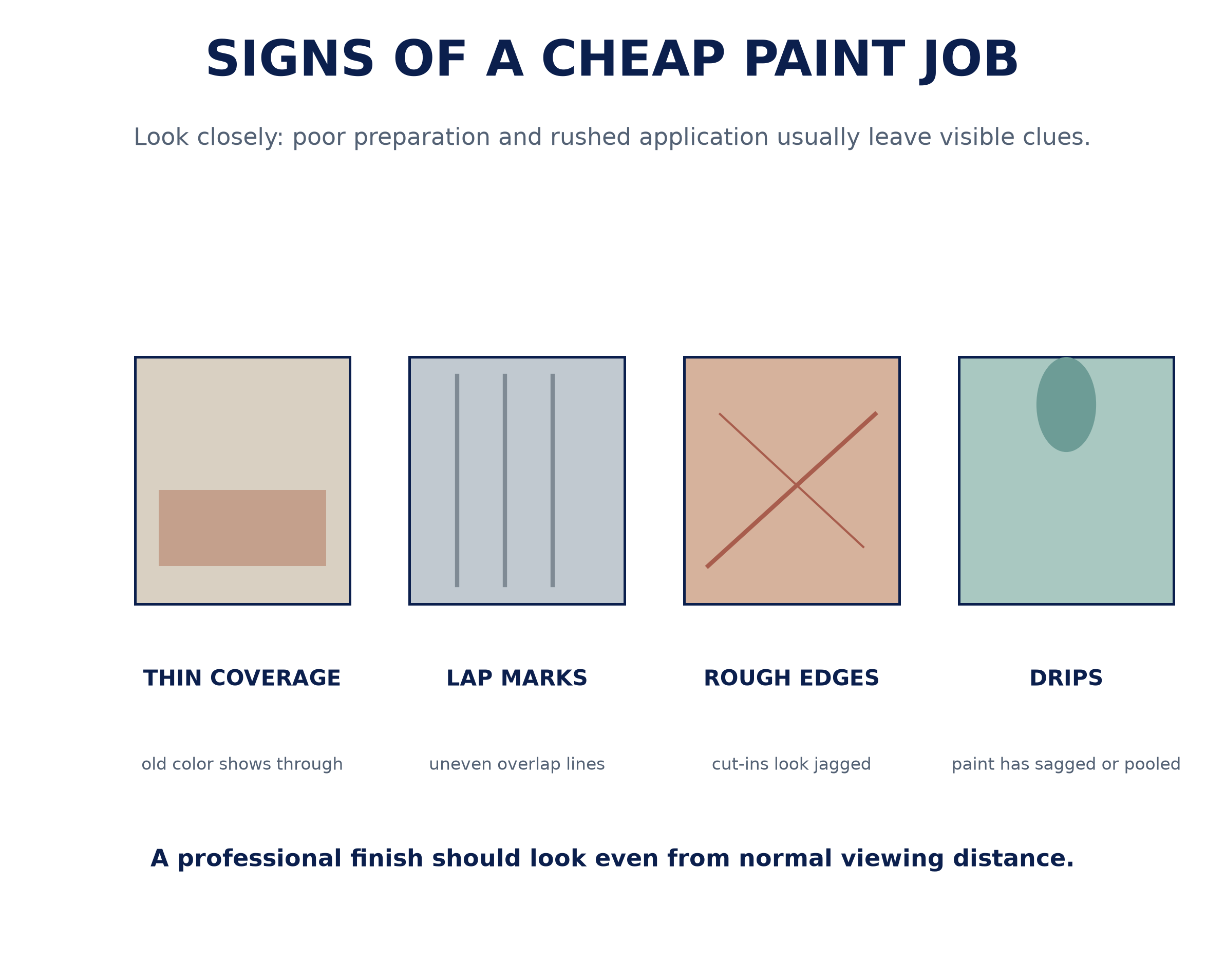
5 Things We Always Find on Homes Painted Too Cheap
Cutting corners is how low-bid painters make a lowball price work. The paint and the labor are not free, so something has to give, and it is almost always the invisible work that protects your walls. Here are the five things we find again and again.
#1: Skipped or Rushed Surface Prep
The first casualty of a cheap job is always prep. We find skipped surface prep constantly, with no sanding or patching before the roller ever came out. The old surface was never made ready, so the new paint had nothing solid to hold onto.
The worst version is painting over dirt and grease, especially in kitchens and near door handles. Paint simply cannot bond to a grimy wall, no matter how good it is. Within a year or two, it starts releasing.
That failure is expensive to undo. Fixing it means scraping off the failing coat and starting the prep over, so you pay for the surface preparation twice. Proper prep and priming the first time is always cheaper than a redo.
#2: No Primer Where It Mattered
Primer is the step budget crews skip most, because it is a whole extra pass that the homeowner never sees going on. We regularly find no primer over patches, repairs, or bare drywall and stains bleeding through the finish coat months later. Water rings, marker, and old stains all find their way back without a stain-blocking primer.
Bare drywall is especially unforgiving. It drinks up paint unevenly, so the wall looks blotchy no matter how many coats go on top. The fix is to prime and repaint, which erases whatever the low bid saved.
#3: Too Few (and Too Thin) Coats
One coat is the classic shortcut. We find thin coats and poor coverage on a huge share of cheap jobs, where a single stretched coat was passed off as finished. You can often see the old color ghosting through, especially on a color change.
The tell is in the light. Paint flashing and roller marks show up where coats were skimped or overworked, leaving a streaky, uneven finish that catches every bit of sun. A quality job uses two full coats for depth, durability, and even color.
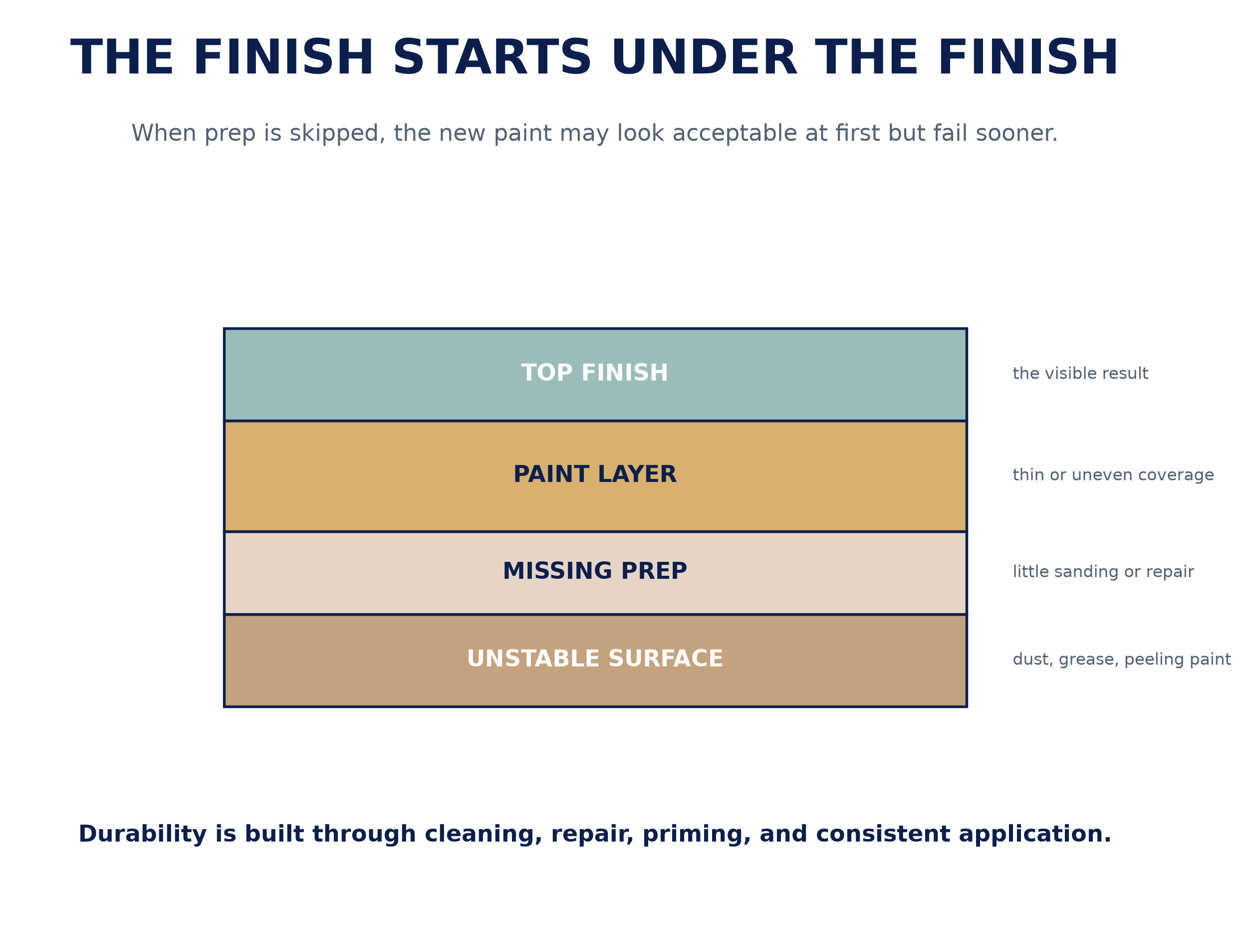
Thin coats also wear out fast. Less paint on the wall means less protection, so the finish chalks, scuffs, and fails sooner. You end up repainting years early, which is the most expensive outcome of all.
#4: Cheap Paint and the Wrong Sheen
The paint itself is where low bids hide real savings. Cheap, low-grade paint has less pigment and weaker resins, so it covers poorly and breaks down faster outdoors. We see chalking and premature fading on exteriors within a couple of humid Mid-Atlantic summers.
Then there is finish. Budget crews often use the wrong sheen for the surface, like flat paint on a bathroom or trim that should be semi-gloss. That leads to surfaces that cannot be wiped clean and show every scuff.
Quality paint is not a luxury here; it is what makes the job last. We use premium paint products from Sherwin-Williams and Benjamin Moore, matched to each surface, so the finish holds up instead of failing early and forcing another repaint.
#5: Sloppy Lines, Drips, and Missed Spots
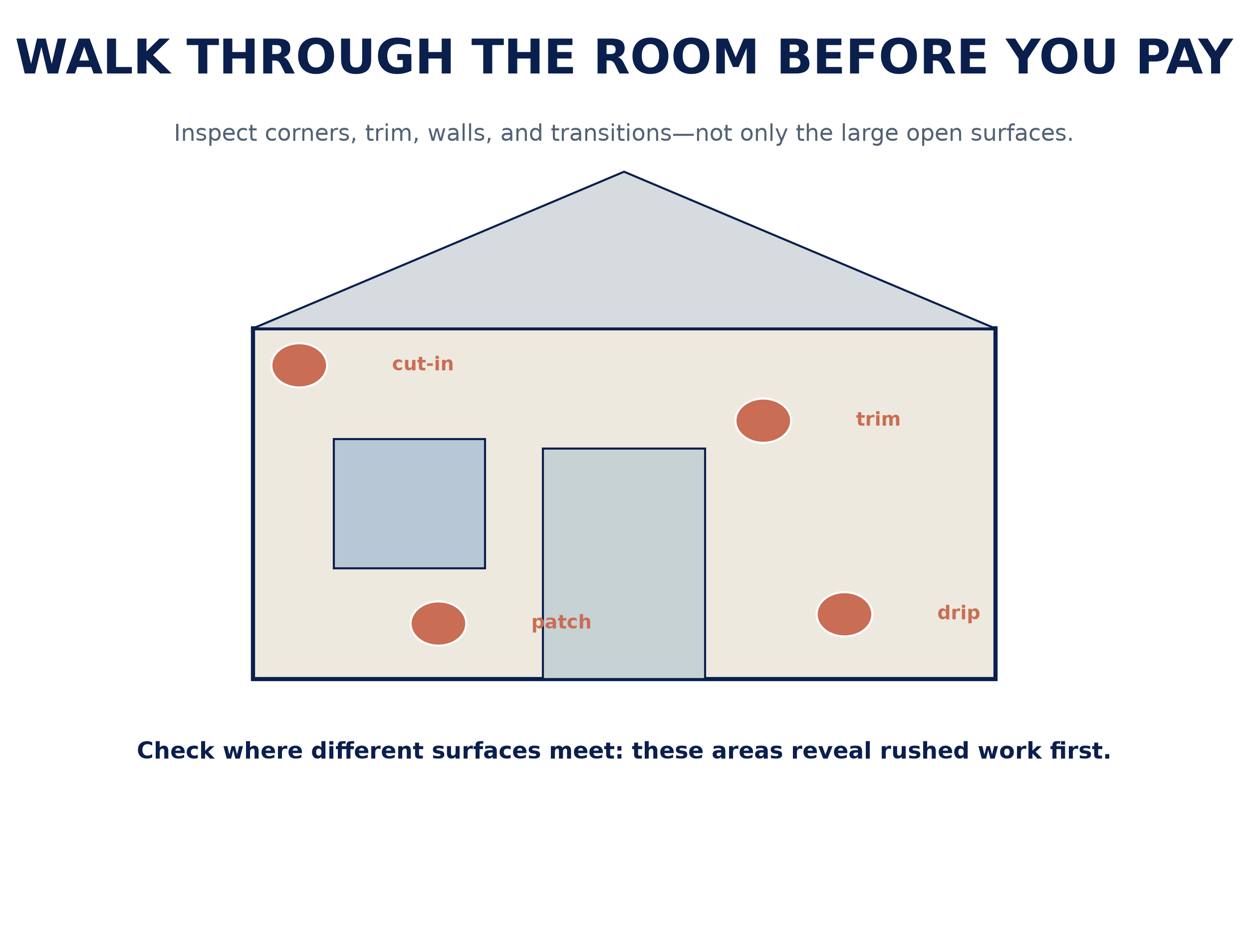
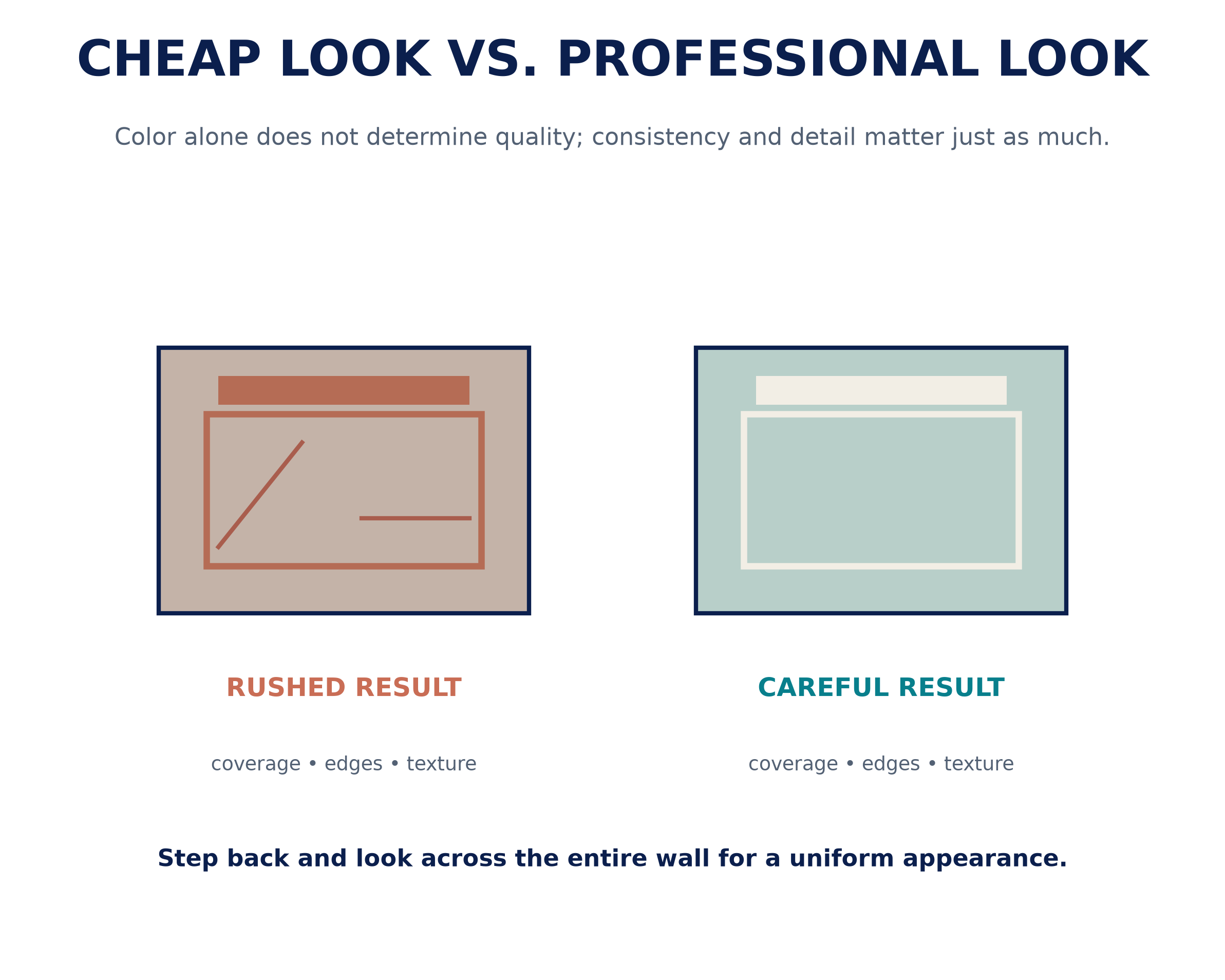
The last giveaways are the ones you can see from the couch. Rushed crews leave sloppy cut lines where trim meets wall, plus paint drips and overspray on floors, hardware, and windows. Tape lines and wavy edges are the signature of a job done against the clock.
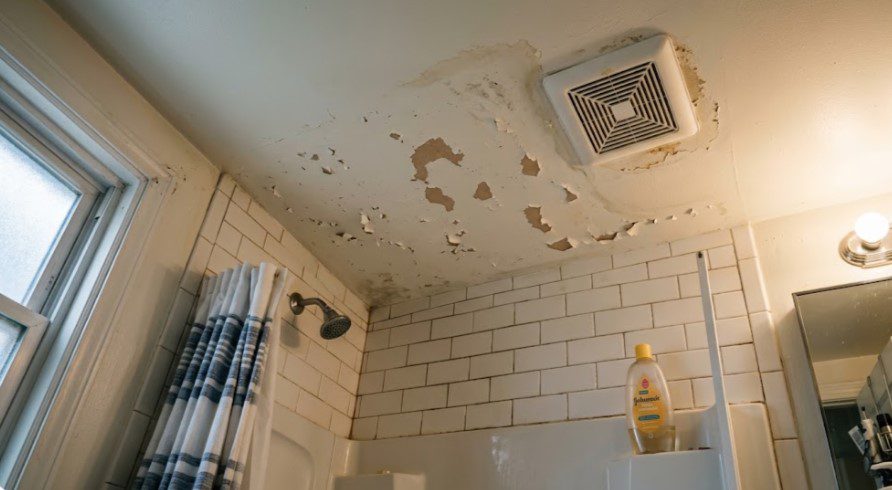
Look closer and you find the misses. Unpainted edges and missed spots hide behind doors, above cabinets, and in corners, along with failed caulking and gaps that were never sealed. Those gaps let moisture in, which is where peeling and bubbling start.
Detail work is where discipline shows. It is the kind of finish work we sweat over for homeowners around Bethesda and across the DMV, because clean lines are the easiest way to tell a real pro from a rushed one.
Why “Cheap” Costs More — and How We Do It Right
Add it all up and the pattern is clear: a low bid usually means paying twice. When prep, primer, coats, and paint are all shortchanged, the finish fails early, and the redo costs more than doing it right the first time would have. Cheap is rarely cheap in the long run.
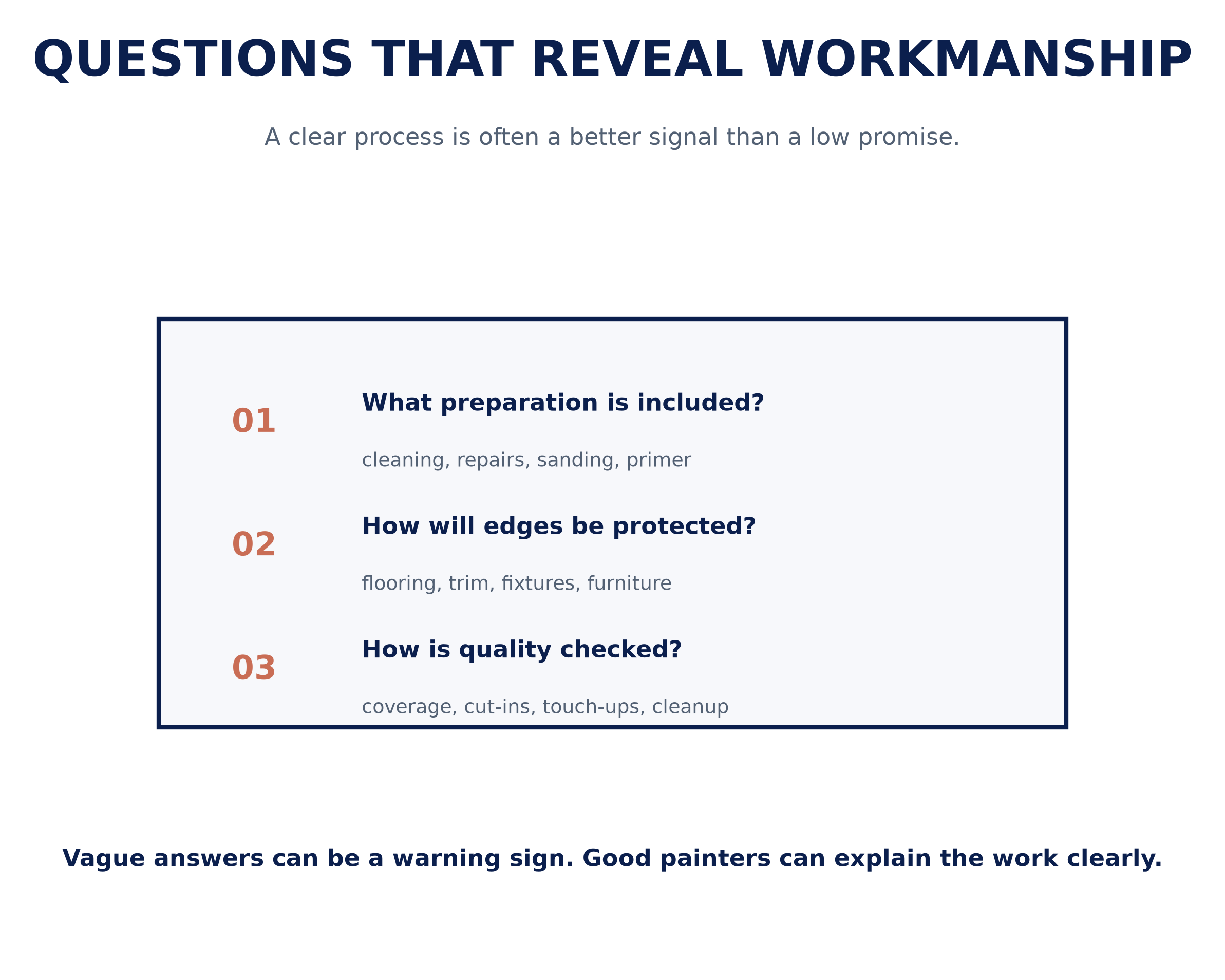
Here is what a proper professional paint job includes:
- Thorough prep, with sanding, patching, cleaning, and degreasing before any paint.
- The right primer on repairs, bare drywall, and stained areas.
- Two full coats of quality paint for even, durable coverage.
- The correct sheen matched to each surface and room.
- Clean lines, sealed caulking, and a final walkthrough to catch every spot.
That documented process is how veteran-led, disciplined crews protect your investment. As a licensed and insured Maryland contractor holding an MHIC license, we back our work with a 3-year workmanship warranty and zero-surprise pricing. For a real example of undoing a rushed job, see how we fixed one home’s failing exterior on the sunny side.
If you suspect your last job was done too cheap, or you are staring at a suspiciously low bid, we can help you avoid the redo. Get a free, zero-surprise quote and an honest assessment of your walls. Request a free quote and we will tell you straight what your home actually needs.
Frequently Asked Questions
What are the signs of a bad paint job?
The clearest signs are peeling, streaky or uneven coverage, roller marks and flashing, sloppy cut lines, drips, and stains bleeding through. Most trace back to skipped prep, no primer, or too few coats.
Why do cheap paint jobs fail so fast?
Because the savings come from skipping the work that makes paint last, like prep, primer, and a second coat. Without those, the finish cannot bond or protect the surface, so it fails within a year or two.
What corners do low-bid painters usually cut?
The invisible ones: surface prep, primer, coat thickness, and paint quality. They also rush detail work, leaving sloppy lines, missed spots, and unsealed caulking.
How can I tell if my paint job was done right?
Look for even coverage with no ghosting, crisp lines at trim and ceilings, no drips or overspray, and sealed caulk lines. A proper job uses two full coats of quality paint over prepped, primed surfaces.
Does cheap paint really cost more in the end?
Usually, yes. A low-bid job that fails early means paying again for prep, primer, and repainting, which almost always exceeds what a quality job would have cost the first time.
What should a professional paint job include?
Thorough prep, the right primer, two full coats of premium paint, the correct sheen per surface, clean detail work, and a warranty. A reputable contractor should also be licensed and insured.

I'm Chad Heisman, founder of Precision Paintworks. After serving in the military, I built this company in 2021 on a pretty simple idea: your home deserves the same care I'd give my own.
I run a veteran and family-owned painting crew right here in Maryland that has successfully completed over 500 painting projects so far. Got a question about your place? Ask me. I'd rather help you get it right the first time than sell you anything.