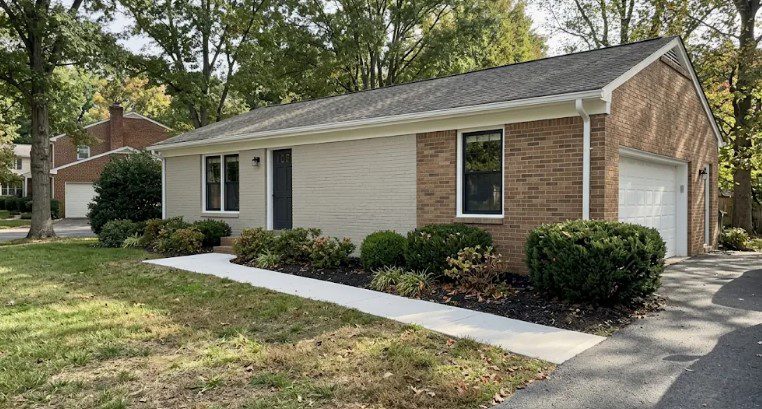



I'm Chad Heisman, founder of Precision Paintworks. After serving in the military, I built this company in 2021 on a pretty simple idea: your home deserves the same care I'd give my own.
I run a veteran and family-owned painting crew right here in Maryland that has successfully completed over 500 painting projects so far. Got a question about your place? Ask me. I'd rather help you get it right the first time than sell you anything.
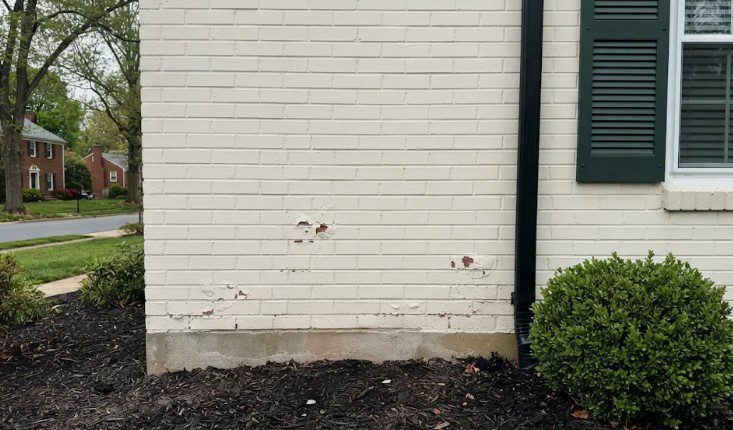
Paint that peels within a year almost always failed because of something that happened when it went on: a damp surface, sticky air, mildew left underneath, or new paint over slick old oil. At that age, wear isn’t the problem. Application is.
If you’re standing in the yard wondering why is my exterior paint peeling after one year, the loose paint itself can usually tell you which of those it was.
The Loose Paint Shows What Went Wrong on Painting Day
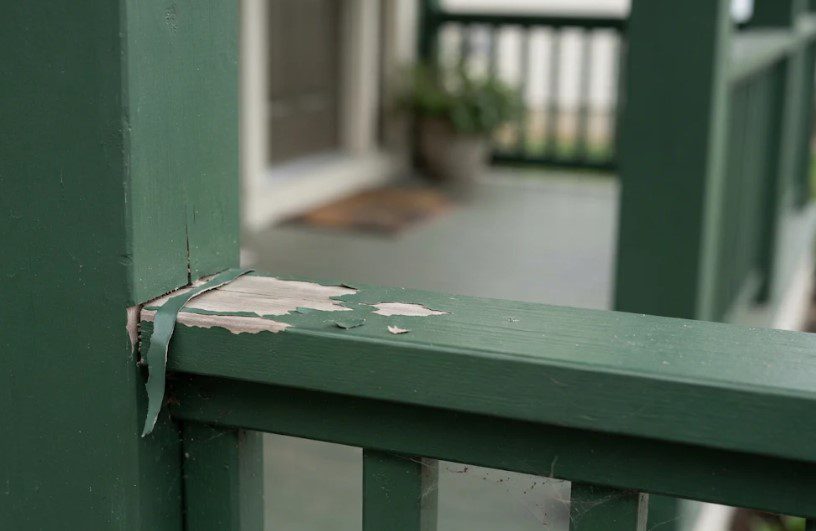
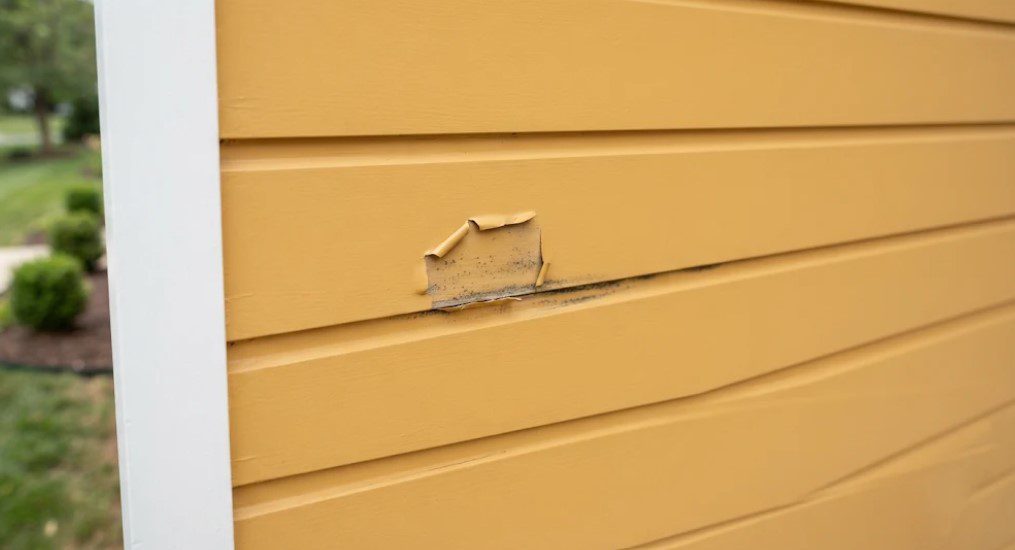
Lift a loose edge gently, or pick up a chip that has already fallen, and look at its back. Black or gray specks mean something was growing under the paint:
- A smooth, shiny layer left behind on the wall means the new coat never grabbed the old one.
- Clean, bare wood with nothing on it often means primer got skipped, which is how a whole wall can come apart in a couple of seasons.
- Small bubbles that never broke open point to moisture, either in the air on painting day or inside the siding.
- Where the damage sits matters too: peeling confined to one wall or one band of boards narrows the list fast.
Painting Over Mildew Can Cause Peeling Within a Year
Mildew that’s only rinsed, not killed, keeps growing under the new film and pushes it off from behind.
Black freckles on the back of a curled patch of mustard paint told the story at a house in Bethesda before the owner finished explaining it. The siding had been repainted in June 2025, and the shaded side had a mildew film that was washed but never treated. Less than a year later, patches were lifting along the lap seams on that side.
We pulled off every piece a putty knife could get under, treated the boards with a mildew cleaner, rinsed, and gave them several sunny days before primer and the finish coats went back on.
Latex Paint Peels Over Oil Based Paint That Was Never Prepped
The trouble starts when the old oil was never dulled down or primed. Oil enamel cures hard and glassy, and latex has nothing to bite into.
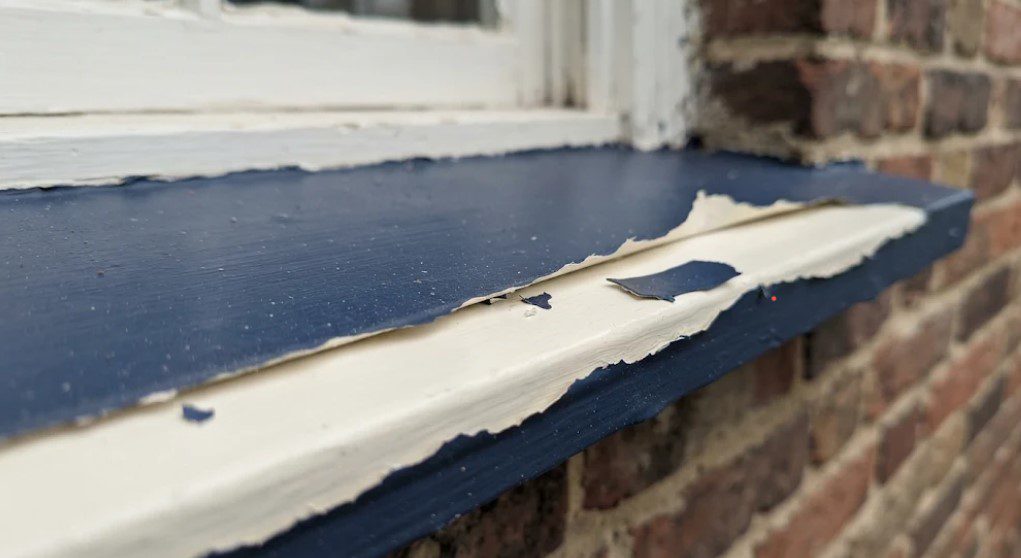
By the time the owners of this brick colonial in Potomac reached me, they’d been pulling strips of navy paint off their window sills by hand, like tape. Last year’s latex had gone straight over decades-old white oil enamel with no sanding and no bonding primer. The house dates to the 1960s, so a lead check came first, before any sandpaper touched that old coat. After that, we took the loose navy off, dulled the gloss, used a primer made for slick surfaces, and brought the navy back.
Painting in Humid Weather Weakens the Bond From the Start
On a muggy Maryland day, or late in the afternoon as dew starts to settle, moisture can collect on the siding before fresh paint has firmed up. The coat may look fine all summer. Then the first winter of freezing and thawing finds those weak spots and pries them loose. I don’t start on mornings when the siding is still wet with dew, and I wrap up each side early enough to stay ahead of the evening damp.
Power Washing Before Painting Causes Peeling When the Siding Stays Wet
The washing itself isn’t the problem. Painting too soon after it is. Siding soaks up water during a wash, and paint rolled over damp wood traps that water inside.
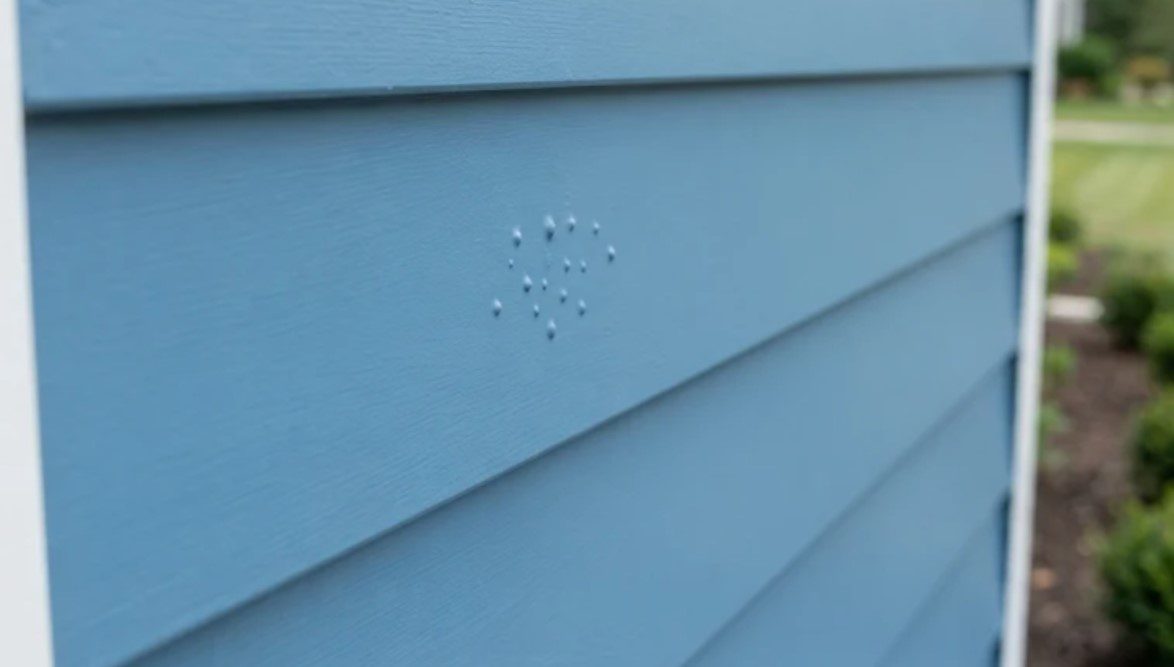
Washing and painting in the same weekend is what caught up with a house in Mount Airy. The owner rinsed the blue siding on a Saturday and painted on Sunday, and by midsummer one board had broken out in a tight cluster of bumps. We cut the blisters open, shaved them flat, waited until a moisture meter read the wood as dry, then spot-primed and repainted the board.
A Painter’s Warranty May Cover Peeling Paint, Depending on the Cause
Whether it does comes down to what caused the failure and what the paperwork says. Many written warranties cover peeling that comes from how the paint was applied, and many leave out damage from leaks or other water problems the painter didn’t control.
Find your written warranty and check its length, what it excludes and how to file a claim. Then send the painter clear photos while the problem is still small. Our own exterior repaint work carries a 3-year warranty.
FAQ
How can I tell if old paint is oil or latex?
Wipe a small spot with rubbing alcohol on a cotton ball. If color comes off onto the cotton, it’s latex. If nothing transfers, you’re most likely looking at an oil coating that needs dulling and the right primer.
Is it safe to pull off loose flakes myself?
Lifting a hanging flake by hand is usually fine. On homes built before 1978, though, don’t scrape or sand anything until the paint has been tested for lead, since older layers underneath may contain it.
Will touching up the bad spots fix it?
Only if the cause was limited to that spot. If the whole job went on over damp boards or slick paint, patches will keep popping up nearby, and the full wall usually needs attention.
Does paint color affect how fast it fails?
Dark colors soak up more heat, so siding under them expands and shrinks more through the day. On a sunny wall, that movement can speed up failure wherever the bond was already weak.
What photos should I send a painter?
Take one wide shot of the whole wall, a close-up of the worst spot, and a picture of the back of a fallen chip. Add the month the paint went on and any nearby gutters or sprinklers.
Your Next Move
Don’t put another coat over paint that let go this early until you know why it did. Find your paperwork, grab a few close-ups, and send me photos. Most of the time, the back of one flake is enough for me to name the cause.