


I'm Chad Heisman, founder of Precision Paintworks. After serving in the military, I built this company in 2021 on a pretty simple idea: your home deserves the same care I'd give my own.
I run a veteran and family-owned painting crew right here in Maryland that has successfully completed over 500 painting projects so far. Got a question about your place? Ask me. I'd rather help you get it right the first time than sell you anything.
At a Glance:
- Professional exterior paint jobs last 7 to 10 years; DIY jobs typically last 4 to 7 years.
- Professional painting runs $1.50 to $5.00 per square foot; a DIY job runs $800 to $2,500 — but rushed prep can push repair costs past $6,000.
- Pros finish in 3 to 5 days; a DIY exterior project can take 80+ hours spread over 6 to 8 weekends.
- Exterior work means ladder and VOC risks, and homes built before 1978 legally require EPA-certified professionals for lead paint.
- Small, low, interior touch-ups are fine to do yourself; whole-house exterior work in Maryland’s humid, freeze-thaw climate is usually worth hiring out.
There’s a moment every Maryland homeowner hits when a wall starts looking tired — the color’s gone flat, a corner’s flaking, and the mental math begins: paint’s cheap, I own a ladder, how hard can it be?
It’s a fair thought. But before you load up a cart at the hardware store, it’s worth knowing what that question really involves.
I’ve been doing this for a long time, and I’ll tell you up front: the paint is the easy part. Anybody can roll color onto a wall. What separates a paint job that lasts a decade from one that’s peeling by year three is everything that happens before the painting begins. Keep that in mind as we go.
“At Precision Paint Works DMV, careful prep is what turns a good-looking exterior into a finish that lasts.”
— Precision Paint Works DMV
DIY exterior painting is not the smart default for Maryland homes; it is a gamble against weather, safety, and long-term cost.
The Real Cost Comparison: DIY vs. Professional
Let’s start with the money, because that’s usually what’s driving the “should I DIY this?” thought in the first place.
Here’s an honest cost comparison. A DIY paint job on a modest home runs most Maryland homeowners somewhere between $800 and $2,500 once you tally everything up. The paint itself isn’t cheap — premium paints that actually hold up run $50 to $100 per gallon, and you’ll need more paint than you think for even coverage. On the professional side, exterior painting typically runs $1.50 to $5.00 per square foot depending on your home’s exterior, its condition, and how much prep it needs.
Now, on paper, DIY vs. pro looks like an easy win for doing it yourself. But that’s the trap. Labor rates in Maryland run higher than the national average for skilled trades, and that premium isn’t padding — it’s buying you speed, insurance, and a finish that doesn’t cost you again in a few years. The real question isn’t the sticker price. It’s the total cost over the life of the job.
Flowchart [DIY or hire? Follow the decision path]
A compact guide to help homeowners decide fast without guessing.
If yes, DIY may be reasonable.
If yes, hiring a pro usually makes more sense.
If yes, call a certified professional.
Choose the route that protects the house, not just the weekend.
The Hidden Cost Most DIY Painters Underestimate
Here’s where I see people get burned. The line item that wrecks budgets is the hidden cost — and it’s the thing DIY painters underestimate more than anything else.
Most DIY painters budget for paint and a couple of brushes and call it a plan. Then reality shows up. A real DIY painting project needs quality brushes, rollers, painter’s tape, drop cloths, and often specialized equipment like extension ladders and a sprayer you don’t own. DIY materials alone typically run $200 to $600 for a modest project, and that’s before you rent the right equipment to reach a second story safely. Add it up and the “cheap” option isn’t so cheap.
And that’s the good outcome. When a DIY exterior painting job goes sideways — rushed prep, wrong product, uneven coverage — the fixes can exceed $6,000. I’ve watched it happen.
Let me give you an example. I had a homeowner over in the Frederick area last spring who’d painted his own home’s exterior two summers earlier to save a few bucks. Proud of it, too — and honestly, the color looked great from the street the first year. But he’d skipped priming the bare wood on the sunny side and rushed the prep to beat a rainstorm. By the time he called me, that whole south-facing wall was peeling in sheets, the caulking gaps had opened up, and moisture had gotten behind the paint film.
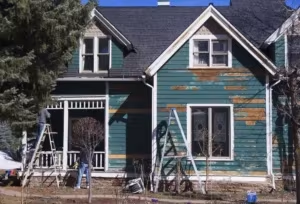
What started as a weekend money-saver turned into a full strip-and-repaint plus wood repair — more than double what a professional job would’ve cost him the first time. He wasn’t careless. He just didn’t know what he didn’t know. That’s the hidden cost nobody puts on the shopping list.
One more thing homeowners forget: even the leftover paint costs you. The Maryland paint stewardship program adds a recycling fee to paint purchases, so those extra cans you over-bought “just in case” cost a little more than the shelf price.
Comparison: Dos and Don’ts [What saves money vs. what creates it]
A quick side-by-side view of the habits that make or break an exterior paint job.
DO Smart moves
- Wash and dry the exterior first
- Repair peeling, cracks, and gaps
- Prime exposed wood or bare spots
- Plan for equipment and safety gear
DON’T Costly shortcuts
- Paint over dirt or failing coating
- Skip ladders or proper access planning
- Assume one coat fixes everything
- Ignore weather windows and dry time
Why Surface Preparation Makes or Breaks the Whole Thing
I’ll say it again because it’s the most important sentence in this article: paint preparation is crucial in Maryland’s climate to ensure the finish actually lasts. Proper surface preparation is the difference between a job that holds and one that fails.
We’ve got humid summers, heavy spring pollen, and freeze-thaw winter cycles here. That combination is brutal on a cut-corner paint job. Skipping primer can lead to premature paint failure, and rushed prep is exactly why DIY painting projects may start peeling within three to five years.
Proper preparation means extensive prep work before a drop of color goes on — power washing the surface, filling holes, sealing caulking gaps, sanding, and priming bare spots. Prep time for a DIY homeowner alone can run 10 to 20 hours before painting even begins, and that’s if you know what you’re doing. It’s not glamorous, but it’s the whole ballgame.
“Indoor relative humidity should ideally be kept between 30% and 50%.”
“Recent research on building moisture continues to show that trapped dampness is strongly linked to surface failure, mold growth, and shortened coating life.”
The Safety Risks You’re Actually Taking On
This is the part I wish more people thought about before they climbed a ladder with a paint bucket.
Exterior work means heights, and heights mean safety risks. Over 50,000 ladder-related injuries happen in the U.S. every year — 22,710 workers suffered ladder injuries in 2020 alone. My crews use OSHA-compliant scaffolding and proper safety gear precisely because we treat that number as real. On top of the fall risk, DIY painters face respiratory risks from VOCs and dust that a weekend warrior rarely has the gear to handle. And when something does go wrong on a job? Professionals carry liability insurance for exactly that. You, on a borrowed ladder, do not.
“Falls are one of the leading causes of serious injury in construction and home improvement work.”
Lead Paint: The One That Should Stop You Cold
If your house was built before 1978, we need to have a serious talk before you sand anything.
Maryland homes built before 1978 may have hazardous lead-based paint, and disturbing it wrong is a genuine health hazard — especially for kids. This is the biggest lead paint risk in any older-home diy job. Lead paint disturbance legally and practically requires EPA-certified professionals who follow lead-safe work practices. Hiring a pro isn’t a luxury here — it’s essential for proper lead paint remediation. This alone is the reason I talk plenty of pre-1978 homeowners out of the DIY route.
“No amount of lead in a child’s blood is considered safe.”
What You Actually Get from Professional Exterior Painting
So what does your money buy when you hire it out? Real professional exterior painting is a different animal from a homeowner with a roller.
Professional painters use higher-grade materials for durability and know which paint types suit your specific siding — brick, fiber cement, wood, or stucco surfaces each behave differently. A trained professional crew brings the right equipment: airless sprayers and scaffolding that let us work efficiently and lay down consistent film thickness with even coverage, no visible brush strokes or brush marks.
Professional painters typically complete an exterior in three to five days — a professional job that’s organized, insured, and warrantied, versus a DIY project that can stretch 80+ hours across six to eight weekends and 7 to 14 days of elapsed time before it’s done. That efficiency, that professional finish, and that long-term value are what you’re really paying for.
Before-and-After [How the same house looks with proper prep]
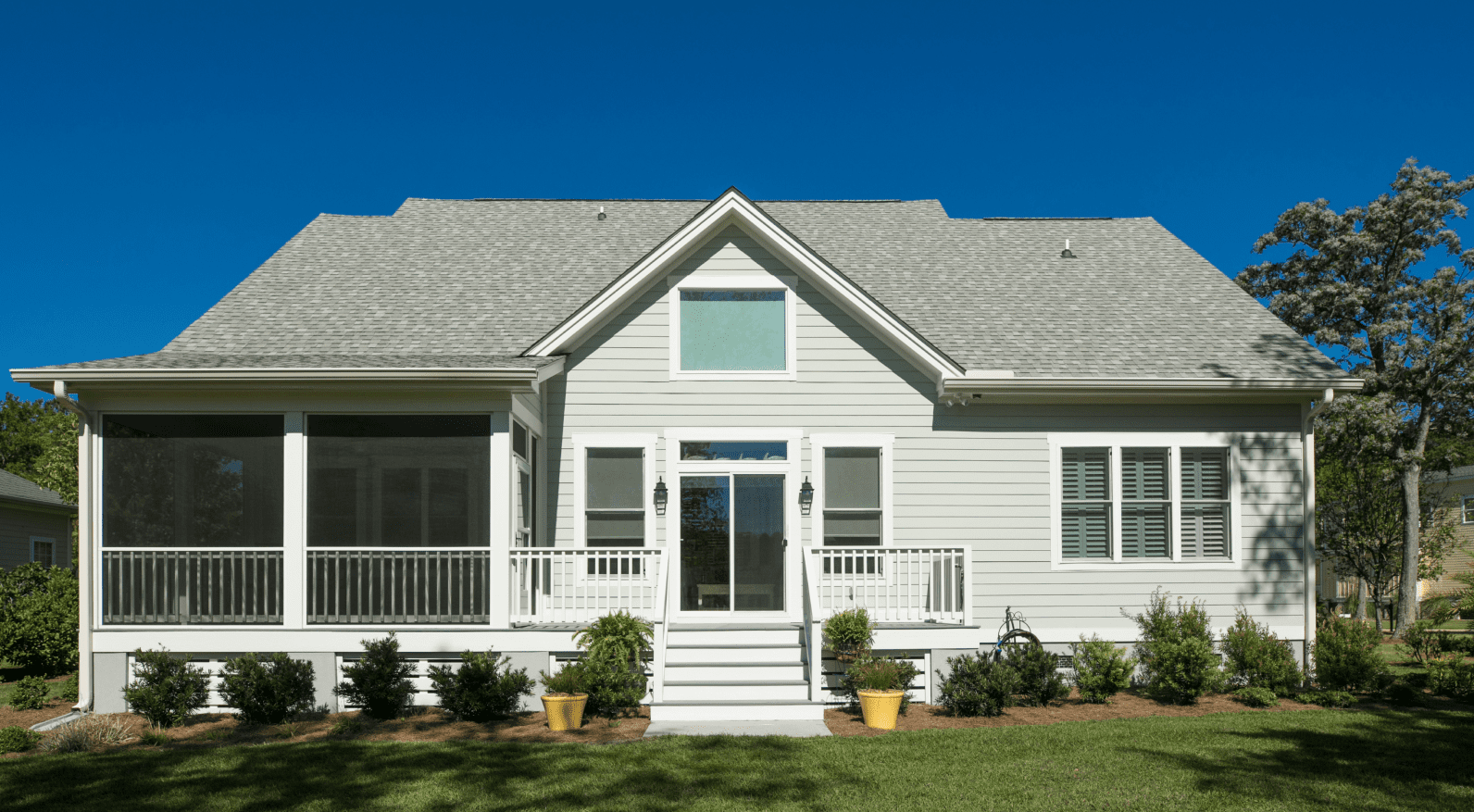
Here is the same house in my example to show why professional work holds up better over time.
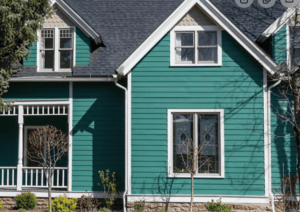
BEFORE Rushed exterior work
- Peeling, chalking, and exposed wood
- Uneven color and visible lap marks
- Open caulk lines and failed edges
- Early water intrusion risk
AFTER Professional exterior painting
- Clean, even coverage on every surface
- Sharper lines and better film build
- Longer-lasting protection from weather
- Less maintenance and fewer touch-ups
The Results: How Long Each One Lasts
Here’s the bottom line on results, and it’s the number that matters most. Professional paint jobs last 7 to 10 years. DIY paint jobs typically last 4 to 7 years. That gap — professional 7 to 10 years compared to 4 to 7 for DIY — is the whole story on long-term value. A professional finish means fewer touch ups, less premature peeling, and a home’s exterior that still looks sharp when your neighbor’s is already chalking and fading.
Myth vs. Fact [What homeowners often assume vs. what actually happens]
A fast reality check for the most common exterior painting misconceptions.
The real challenge is prep, weather timing, and durability.
Clean, dry, repaired surfaces matter more than the color itself.
Equipment, repairs, and redo costs can erase the savings fast.
You get safety, insurance, and a finish that holds up longer.
When DIY Makes Sense (And When It Really Doesn’t)
Now, I’m not here to tell you to never pick up a brush. There are absolutely times when a diy approach makes sense, and I’d rather be straight with you than pretend otherwise.
A DIY job on a small, low, easy-to-reach surface can be a perfectly reasonable weekend win. Repainting a bit of interior trim, refreshing a couple of interior rooms, popping off outlet covers and doing some interior house painting — that’s the kind of DIY work where diy makes sense, the risk is low, and mistakes happen without much consequence. If that’s your project, go for it.
Decision Tree [DIY or hire for your next job?]
A simple path to help you decide whether the project belongs in your weekend plan.
DIY may be fine for touch-ups and minor interior work.
Hire a pro to avoid safety and durability issues.
Lead-safe work practices make professional help the better choice.
Professional prep and equipment usually deliver the better result.
But whole-house exterior work, anything with real height, specialty finishes, stucco surfaces, or a pre-1978 home? That’s where project complexity outruns the diy route fast. That’s not a weekend — that’s a liability. And here’s the most common DIY exterior painting mistake to avoid: assuming exterior is just interior painting on a bigger wall. It isn’t. The weather exposure, the heights, and the prep demands are a different sport entirely.
So, Is It Worth Hiring a Professional Exterior Painter?
For a small interior touch-up, hiring out probably isn’t necessary — do it yourself and enjoy it. But for your home’s exterior in Maryland’s climate? Yes. Is it worth hiring a professional exterior painter? When you weigh the real costs, the safety risks, the lead paint rules, and the fact that a professional job lasts nearly twice as long, hiring a professional almost always comes out ahead — not because DIY is bad, but because exterior work is unforgiving and your house is worth doing right the first time.
If your project is large, exposed, or tied to a pre-1978 home, the safer and smarter choice is to hire out.
If you’re weighing it for your own place, that’s exactly the conversation I like having. We handle professional exterior painting across Frederick County and the surrounding areas with meticulous prep and a 3-year warranty, and our Bethesda and Montgomery County painting team can walk your property and tell you honestly whether it’s a job worth doing yourself or one worth handing off.
If you want to compare options, you can review our exterior painting services, browse the Precision Paint Works DMV blog, or use the contact page for a free estimate.
No pressure, no hard sell — just a straight answer. Call me at (240) 406-8440 or email info@precisionpaintworksdmv.com for a free estimate, and I’ll tell you what I’d tell my own family.